
Short Term Aid, Long Term Worry for Farmers Heading Into 2026
Federal aid promises short term relief for Arkansas farmers, but lingering trade damage, shifting global markets, and rising costs raise concerns about the future of Arkansas agriculture heading into 2026.

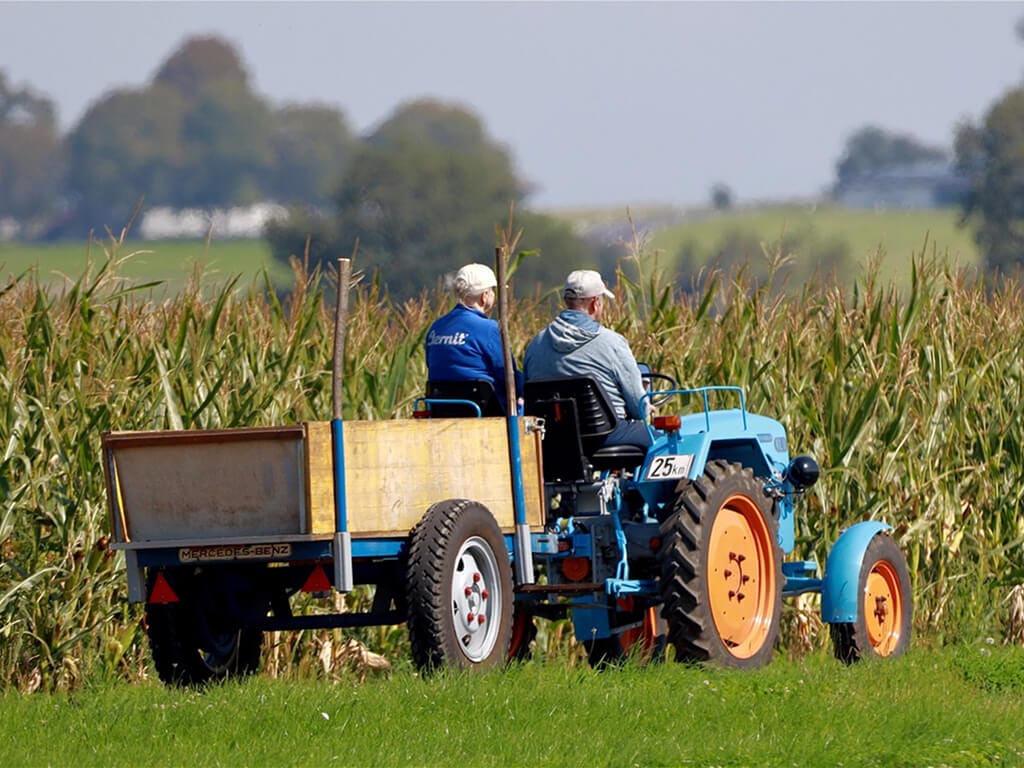
As Arkansas farmers head into 2026, they are closing out a year marked by deep strain across the agricultural sector. High input costs, low returns, and ongoing market uncertainty tied to President Donald Trump’s trade policies have placed many producers under intense financial pressure. Some have already buckled under the weight of those challenges, while others continue to hold on, hoping conditions will turn in their favor.
Trump’s promise of federal assistance has not come close to covering farmers’ losses, and uncertainty remains about how much relief the aid can offer over the long term. With prices showing no meaningful decline and global markets continuing to shift, many farmers are unsure what recovery will look like. Arkansas’ largest export products, particularly soybeans, are increasingly being routed to other regions of the world, while Chinese investment across Latin America has strengthened alternative supply chains. For many producers, the growing fear is that the United States could be pushed to the margins of the global agriculture sector in the years ahead.
Federal Aid Offers Relief, Not Resolution
While the challenges facing farmers have become increasingly clear, President Donald Trump has leaned heavily on direct financial assistance as a response. Many farmers welcome the support, noting that any relief helps ease immediate financial pressure. On Dec. 8, Trump announced that his Republican administration would distribute $12 billion in one time payments to farmers, a significant infusion intended to stabilize the sector.
Farmers are expected to learn the exact amount of aid they will receive around Christmas. Payments scheduled to arrive by the end of February will be capped at $155,000 per farmer or entity, and only farms earning less than $900,000 in adjusted gross income will qualify. During Trump’s first administration, however, some large farms found ways around those payment limits and ultimately collected millions.
Beyond the short term boost to farm finances, many producers say they are looking for more lasting solutions. While they are grateful for the assistance, farmers say they do not want to rely on government aid year after year. Instead, they are seeking conditions that allow them to operate sustainably on their own, without recurring financial rescue, a shift they say is necessary to strengthen the agriculture sector.
Rising Costs and Trade Disruption
Over the weekend, President Trump signed an executive order directing the Justice Department and the Federal Trade Commission to investigate anti-competitive practices across the food supply chain. The order focuses on fertilizer, seed, and equipment suppliers that farmers rely on and extends to meatpacking companies and grocery chains that influence consumer prices. While the move is expected to impact market dynamics, the underlying causes of rising prices remain tied to trade disruptions and broader inflationary pressures. Addressing these trade disruptions remains a critical concern for producers.
American soybean and sorghum farmers, who typically export at least half of their crops, have been among the hardest hit by Trump’s trade dispute with China. Once the world’s largest buyer of U.S. soybeans, China has increasingly turned to Brazil and other South American producers.
Trump and his Cabinet have emphasized the trade deal he reached with Chinese President Xi Jinping in October. However, Liu Pengyu, a spokesperson for the Chinese embassy, said this week that “agriculture trade cooperation between China and the United States is proceeding in an orderly manner,” offering no additional specifics.
To date, China has purchased only slightly more than one-quarter of the 12 million metric tons of soybeans that U.S. officials said would be bought before the end of February. That shortfall has raised doubts about whether Beijing will fully honor its pledge or the broader commitment to purchase 25 million metric tons annually over the next three years. China has not confirmed those numbers.
Even if China meets the agreed volumes, those purchases would only bring U.S. farmers close to the levels they were selling annually before Trump took office.
Shifting Global Markets
In response to ongoing challenges, farmers and farming associations are increasingly looking beyond short-term aid toward long-term solutions. These strategies include diversifying trade partners and expanding domestic uses for soybeans, as reliance on export revenues becomes less certain.
Some producers are shifting to other crops, such as corn and wheat, which benefit from stronger domestic demand, even if they do not offer the same returns that soybeans once provided. For many, the priority is not state or national economics, but ensuring their farms remain sustainable over the long term.
At the same time, Latin American agriculture has rapidly expanded its export capacity, a reality that U.S. farmers acknowledge cannot be ignored. Less than 45 miles from São Paulo, one port handles nearly a quarter of Brazil’s soybean exports. For decades, U.S. agribusiness giants such as Archer Daniels Midland, Bunge, and Cargill have operated facilities there. Today, they share space with COFCO International, China’s state-owned food conglomerate, which has invested roughly $285 million in recent years. That expansion will make the port the largest dry bulk terminal at the site.
The Port of Santos is not alone. On Peru’s central coast, the Port of Chancay is emerging as another major hub. COSCO Shipping, a state-owned Chinese company, is investing at least $3.5 billion to construct 15 berths, logistics facilities, and a 1.1-mile tunnel connecting cargo directly to nearby highways. Once fully operational, Chancay will serve as a regional redistribution hub for exports from Peru, Argentina, Brazil, Chile, Ecuador, and Colombia, handling commodities ranging from copper and lithium to soybeans and other agricultural products. Upon completion around 2035, it is expected to become the region’s third-largest port.
These and other Latin American investments have positioned China to source more agricultural products from the region as it pivots away from U.S. farmers in response to President Trump’s higher tariffs. The region’s rapidly developing infrastructure and lower production costs give Latin American products a competitive edge over U.S. farms, similar to how China’s industrial growth has reshaped global manufacturing.
What It Means for Arkansas Farmers
For Arkansas farmers, the year ahead raises difficult questions. While federal aid may help some survive another season, many say it is time for both Arkansas and the country to confront deeper structural challenges in agriculture before further ground is lost. In the coming seasons, producers plan to diversify their crops and focus more on the U.S. domestic market. These changes could affect farm income and the broader economy, but for generational family farms, the priority is keeping operations afloat.
Farmers are already ordering supplies for next year’s crops and meeting with bankers to discuss the loans they will need. Despite uncertainty, many remain cautiously optimistic that prices will improve if they can secure additional buyers.