Court Ruling in Oklahoma Puts Pressure on Arkansas’ Poultry Industry
A federal judge’s decision in Oklahoma adds legal and financial strain to Arkansas’ poultry industry, prompting concern among growers, officials, and farm groups.

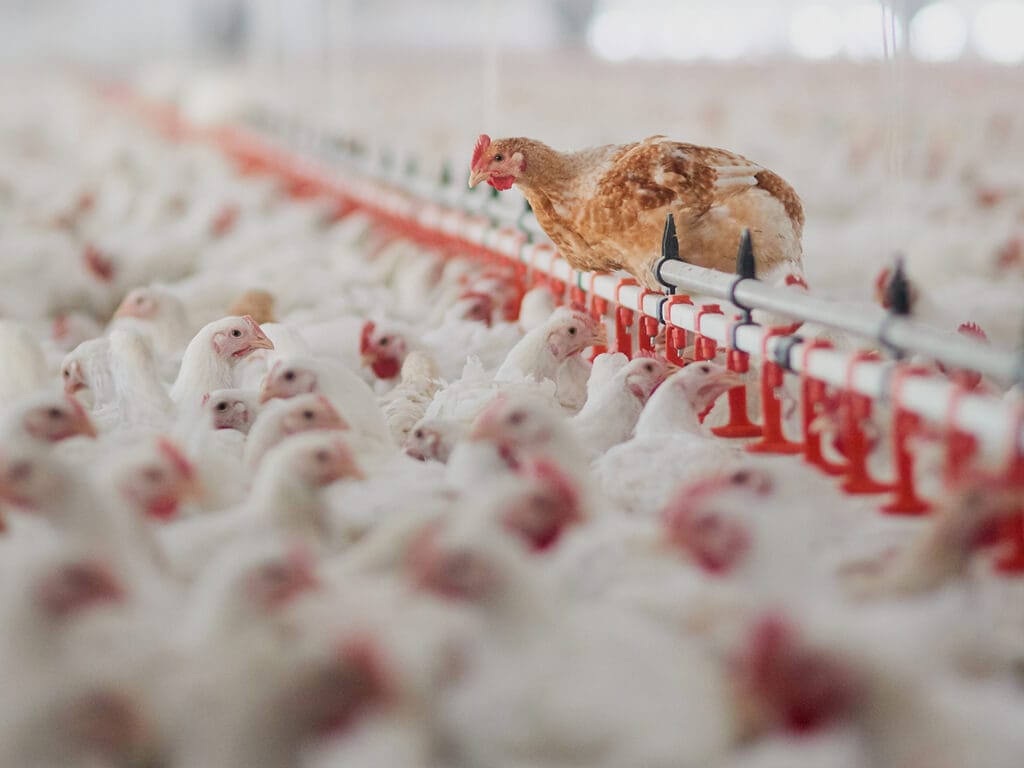
Arkansas’ poultry industry stands as a cornerstone of the state’s economy, shaping rural communities and sustaining family livelihoods across generations. The state ranks third in the nation for both broiler production and value, third for turkey production, and seventh for egg production value. Collectively, these operations generate billions of dollars annually and support tens of thousands of jobs, spanning family growers, processing plants, transportation networks, and feed suppliers.
For much of 2025, the industry held steady even as other areas of agriculture struggled. Strong consumer demand and continued gains in efficiency helped poultry producers manage inflationary pressures and shifting markets. That sense of stability, however, began to weaken toward the end of the year. As avian influenza resurfaced in the state, a federal court ruling in Oklahoma introduced new uncertainty for poultry operations tied to northwest Arkansas, with potential consequences for the broader poultry landscape across the state.
Federal Ruling for the Illinois River Watershed
On Friday, December 19, U.S. District Judge Gregory K. Frizzell ruled that several poultry companies are liable for polluting the Illinois River Watershed in Oklahoma. The decision resolves a long-running lawsuit, first filed in 2005, which focused on poultry waste linked to Arkansas farmers and operations connected to the watershed. The ruling came fully in favor of the Oklahoma state attorney. Defendants in the case include Tyson Foods, Cargill, George’s, Simmons Foods, Cobb Vantress, and Cal-Maine Foods. Judge Frizzell ordered the companies to fund extensive cleanup efforts and comply with new restrictions on land use throughout the watershed.
The Illinois River Watershed is a major drainage basin that spans northwest Arkansas and northeast Oklahoma. It originates in the Ozarks, flows through Lake Tenkiller, and eventually joins the Arkansas River. Because the watershed crosses state lines, the ruling carries implications for poultry operations tied to both Oklahoma and Arkansas.
Earlier this year, Judge Frizzell determined, following evidentiary hearings in June, that runoff from poultry farms continued to harm the Illinois River, Lake Tenkiller, and related waterways. Poultry companies argued that their mitigation efforts had reduced environmental damage, but the court rejected that claim.
Long Term Oversight and Financial Penalties
The ruling ordered the appointment of a special master to oversee long term remediation efforts and provide regular updates to the court. The special master will serve for at least 30 years and will be funded by the poultry companies through an evergreen account that begins with a $10 million balance.
Judge Frizzell also issued an injunction restricting the land application of poultry waste, limiting use to two tons per acre. Under the judgment, companies must pay $10,000 per violation to the Oklahoma Department of Environmental Quality Revolving Fund, in addition to covering attorney fees. All defendants were found to have multiple violations, except George’s, which had one.
The ruling further requires poultry companies to deposit $10 million into a fund to monitor and clean the watershed and to contribute an additional $5 million whenever the fund balance falls below $5 million. Compliance with the order will be overseen by the special master, who has not yet been named.
Beyond financial penalties, the court order places responsibility for poultry waste management on the companies and requires them to terminate contracts with growers who fail to comply with the new requirements.
Grower Concerns and Political Reaction
Regional poultry growers who contract with the defendant companies say the ruling could lead to canceled contracts, leaving many with significant debt and few options to continue operating.
Elected officials in both states criticized the decision. Although the lawsuit was originally filed by a former Oklahoma attorney general, Oklahoma Gov. Kevin Stitt and Arkansas Gov. Sarah Huckabee Sanders said the judgment would cause unnecessary harm to poultry producers operating along the Illinois River Watershed, which spans eastern Oklahoma and the Northwest Ozark Mountains in Arkansas.
“This again shows the negative impact of a ridiculous lawsuit that has gone on for far too long and continues to create unnecessary harm to hardworking Arkansas poultry growers,” Sanders said.
Arkansas Attorney General Tim Griffin called the ruling a “dangerous precedent” that threatens the “constitutional balance between states.” He said he would look for opportunities to help Arkansas farmers pursue an appeal.
U.S. Rep. Steve Womack, R Arkansas, also condemned the decision.
“It is deeply disappointing to see the Oklahoma Attorney General seek political opportunity at the expense of hard working Arkansas poultry farmers,” Womack said in a statement. “Many of these growers have been operating in the Illinois River Watershed for generations, and this judgment will do irreparable harm to their livelihoods and families. Supporting these growers remains of the utmost importance to me.”
Industry Response and Advocacy
Simmons Foods responded by running a full page advertisement Sunday in The Oklahoman newspaper calling on Oklahoma Attorney General Gentner Drummond to “hang up” his cowboy hat and stating that his actions were not pro agriculture.
“Real farmers stick together. Put an end to this attack on agriculture today,” the advertisement said. It was signed by more than 200 people from Arkansas, Missouri, and Oklahoma.
Dan Wright, president of the Arkansas Farm Bureau and a poultry producer in Waldron, described the ruling as an overreach.
“Ultimately, this ruling is a gross overreach and seeks to provide a solution to a problem that no longer exists,” Wright said. “To make matters worse, these decisions are being handed down without any input from farmers. This ruling will have far and lasting impacts on agriculture across our state.”
“Over the last two decades, farmers have made changes to production practices, resulting in exponential improvements to issues outlined in the lawsuit,” Wright said. “Despite doing what has been asked of them and producing the measurable outcomes demanded by these rulings, poultry farmers are left with lost contracts, the threat of bankruptcy and the erosion of long standing family legacies.”
He also criticized a requirement in the ruling.
“The most recent ruling mandates 120 lb per acre Soil Test Phosphorus for land application of poultry litter, which is an arbitrary benchmark not supported by a scientific justification,” Wright said.
“This ruling is detrimental to NWA’s poultry industry, most of all the farm families who strive to protect the land and water through best practices and in compliance with all regulations,” U.S. Sen. John Boozman, R Arkansas, said in a Facebook comment responding to Wright’s Dec. 20 statement. “Their livelihoods are on the line and they deserve better.”
Support for the Ruling
Supporters of the decision include Oklahoma’s current and former attorneys general who pursued the case over two decades. Attorney General Gentner Drummond encouraged companies to negotiate rather than appeal.
Drummond, a Republican, pursued the lawsuit, which was originally filed in 2005 by then Attorney General Drew Edmondson, a Democrat.
“This judgment has significant ramifications for the industry,” Drummond said. “These consequences underscore why we have focused on the importance of negotiations with the poultry companies before getting to this point. A robust poultry industry and clean water can and must coexist.”
Edmondson said he was “very pleased” with the ruling and described it as a long awaited outcome in favor of the state.
Gov. Stitt said Drummond had years to negotiate a responsible settlement.
“These family farmers did everything the right way,” Stitt said. “They got the permit, followed the rules, and they’re still getting sued. Instead, this judgment delivers a direct punishment to producers by stripping them of ownership of their litter as a lawful source of revenue.”
Avian Influenza Adds Pressure
Amid ongoing legal battles, mounting penalties, and rising operational costs, Arkansas’ poultry industry faced fresh anxiety late in the year as avian influenza reemerged. On December 19, Agriculture Department confirmed a case of highly pathogenic avian influenza (HPAI) in Cleveland County.
Arkansas Secretary of Agriculture Wes Ward sought to reassure the public, stressing that the risk of HPAI in the state remains low and that properly handled, fully cooked poultry and eggs are safe to eat. For producers, however, the timing could hardly be worse. An outbreak during the industry’s peak season would compound pressures on operations already navigating a challenging landscape.
The stakes are steep. A U.S. Department of Agriculture report found that a wave of HPAI from mid-October 2024 through March 2025 claimed 50.7 million egg-laying hens nationwide, including significant losses in Arkansas. If similar losses strike this season, the state’s poultry sector could face renewed disruption. Those earlier losses coincided with heightened holiday-season demand for eggs, intensifying pressure not only on farmers but also on consumers.