How a Little Rock Neo Nazi March Exposed a Deepening Digital Divide
The recent Little Rock Neo Nazi march unsettled residents and revealed deepening social media divides in Arkansas.

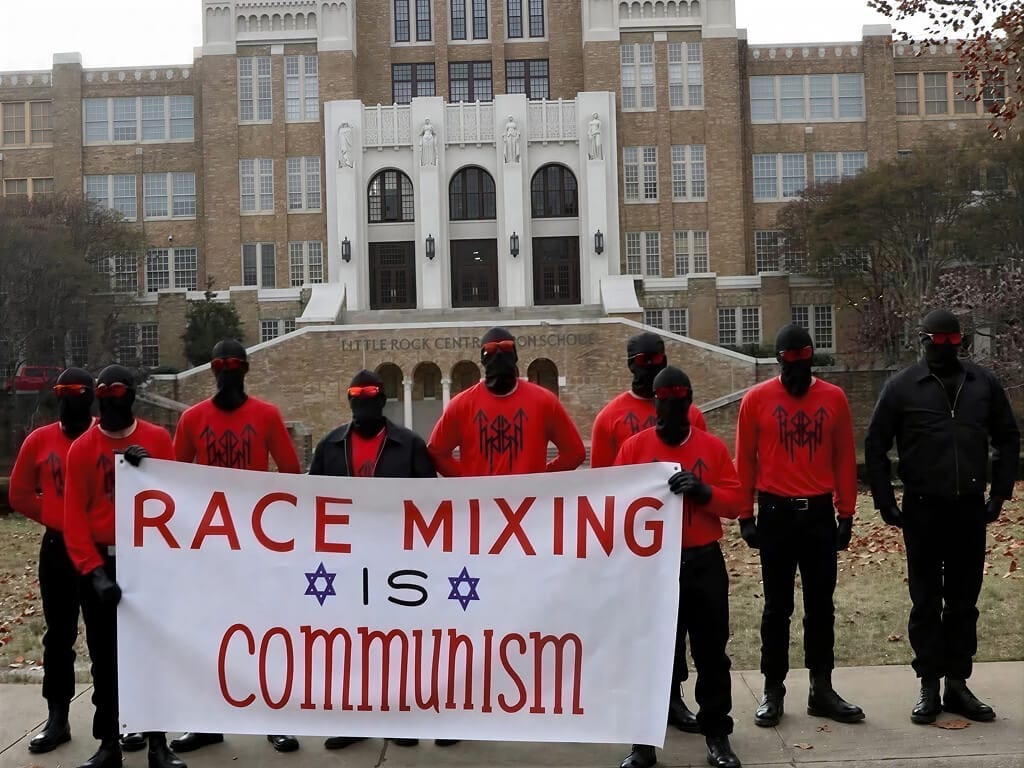
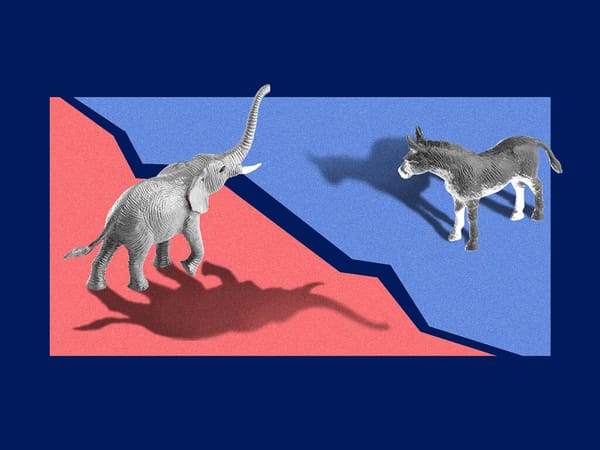
In the age of social media, online feeds often steer people toward the edges. The platforms reward outrage, delivering a steady stream of content built to provoke anger and draw attention. Even those who begin in the political center can find themselves pushed outward by the pull of the algorithm. In this environment, the far left and the far right have grown more visible and more confident, while those in the middle are often brushed aside as uninformed or naive. Neo Nazi groups and pro Hamas activists have also gained new prominence, invoking the language of free speech and finding supporters in digital spaces ready to defend them. The result is a landscape split into two distant corners, where the middle ground grows thinner every day.
The consequences were plain in the online reaction that followed the recent Neo Nazi parade in Little Rock. The march itself remained peaceful, but the unease it stirred was impossible to miss, and social media quickly filled with both support and ridicule aimed at the far right. Some of the comments were deeply troubling. Across community forums, residents began to question how far free speech should reach and what might unfold if extremist groups with fiercely opposing views encounter one another in public spaces.
The questions continue to grow, and the answers remain uncertain. What is clear is that the event left Arkansas with a lingering sense that something deeper and more unsettling is taking shape, much of it revealed through the digital world where division now thrives.
What Happened in Little Rock
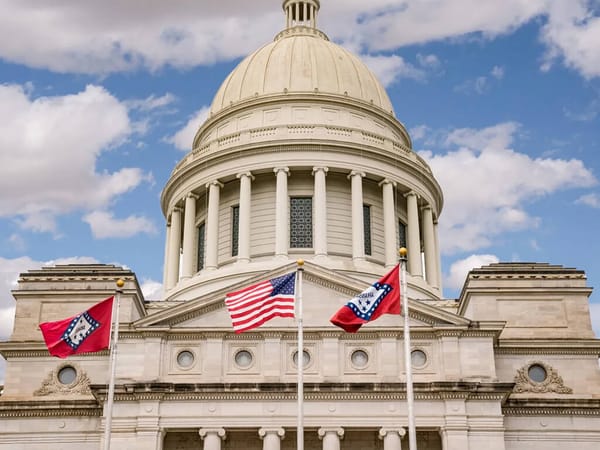
A Neo Nazi group known as the Blood Tribe marched through several parts of Little Rock over the weekend. Masked members carried swastika flags as they moved along Dr Martin Luther King Junior Drive and Daisy L Gatson Bates Drive. They also appeared at the Arkansas State Capitol and outside Little Rock Central High School. All members kept their faces covered and wore black and red clothing.
After the march, the group climbed into the cargo area of a large U Haul truck. Police pulled the vehicle over shortly after it left Central High School. Twenty two people were found inside and were instructed to find other rides home. The driver, identified as 36 year old Zachary Platter of Indiana, was issued a citation.
There were no injuries and no physical harm, but the incident quickly became a major flashpoint across social media in the United States.
Response from Authorities
The Little Rock NAACP characterized the march as both hateful and intimidating. President Marie Hollowell said she suspected the Blood Tribe was filming a recruiting video and highlighted that the group deliberately chose sites of historical and emotional significance. Central High School, known for its role in the story of the Little Rock Nine and the broader civil rights struggle, lies at the heart of the neighborhood, where many longtime residents who lived through that era found the demonstration deeply unsettling.
The NAACP questioned why the community received no advance warning and whether police treated the group with more leniency than they would other protesters. Leaders also raised concerns that officers witnessed the group loading into the U-Haul and did not intervene sooner.
Hollowell noted that under the Arkansas Civil Rights Act of 1993, intimidation driven by racial, religious, or ethnic animosity can be considered a hate offense. Arkansas Code 16-123-106 allows individuals to pursue civil action for injunctive relief or damages if they are subjected to intimidation or harassment motivated by such animosity.
Little Rock police said they were not escorting the group but were monitoring the situation for public safety. After receiving reports that the group might be armed, officers from both the Little Rock Police Department and the Arkansas State Police stopped the truck. Several members were carrying guns with legal permits. Police Chief Heath Helton said confrontations occurred when local residents challenged the Neo Nazis, and officers had to step in to separate the groups.
Governor Sarah Huckabee Sanders condemned the protest, saying racism has no place in Arkansas. While local leaders spoke unequivocally against racism and Nazism, the reaction on social media offered a different view.
The Digital Divide Unfolding
Online platforms, now more influential than traditional media, responded to the march in two distinct ways. While many users mocked the marchers as foolish and misguided, a significant number expressed strong support for the rallies. Some framed the event as an exercise of free expression, while others openly endorsed Nazism, promoted donations, or congratulated the participants online.
Left-leaning users criticized the marchers for covering their faces, comparing the imagery to figures like Donald Trump and Adolf Hitler. The exchange amplified hate, anger, and polarization online. Archived accounts and past extremist networks resurfaced to amplify the event. Social media interactions and legacy media coverage reflected entirely different public moods. The divide was clear from the start, and social media amplified it, potentially allowing it to reach unprecedented levels.
Bridging this divide is challenging. Arkansas protects free speech, even when it involves hateful expression. Legal scholars point out that the state lacks clear hate crime laws. Under the Arkansas Civil Rights Act, intimidation must include an actual or implied threat of violence, and offensive speech by itself is not illegal.
Broader Implications for Arkansas
The march further shaped Arkansas’s national image, reinforcing perceptions of the state as predominantly white and conservative with a complicated relationship to minority communities. Arkansas has a long history with extremist activity, including groups like the Ku Klux Klan, and many such actors have historically chosen the state for that reason. This latest incident only reinforced that perception, drawing both fear and, for some, troubling fascination. How lawmakers respond will be closely watched.
The choice of Central High School as a location, where soldiers historically escorted Black students during desegregation, made the event particularly unsettling. While free speech protections and social media platforms allow such gatherings, the attention the march received and the widening digital divide suggest that similar rallies could take place in the future.