As Crime Data Is Debated, Little Rock’s Mayoral Race Begins to Take Shape
Little Rock’s mayoral race is coming into focus as the vice mayor disputes the administration’s crime reduction narrative and calls for more actions for public safety.

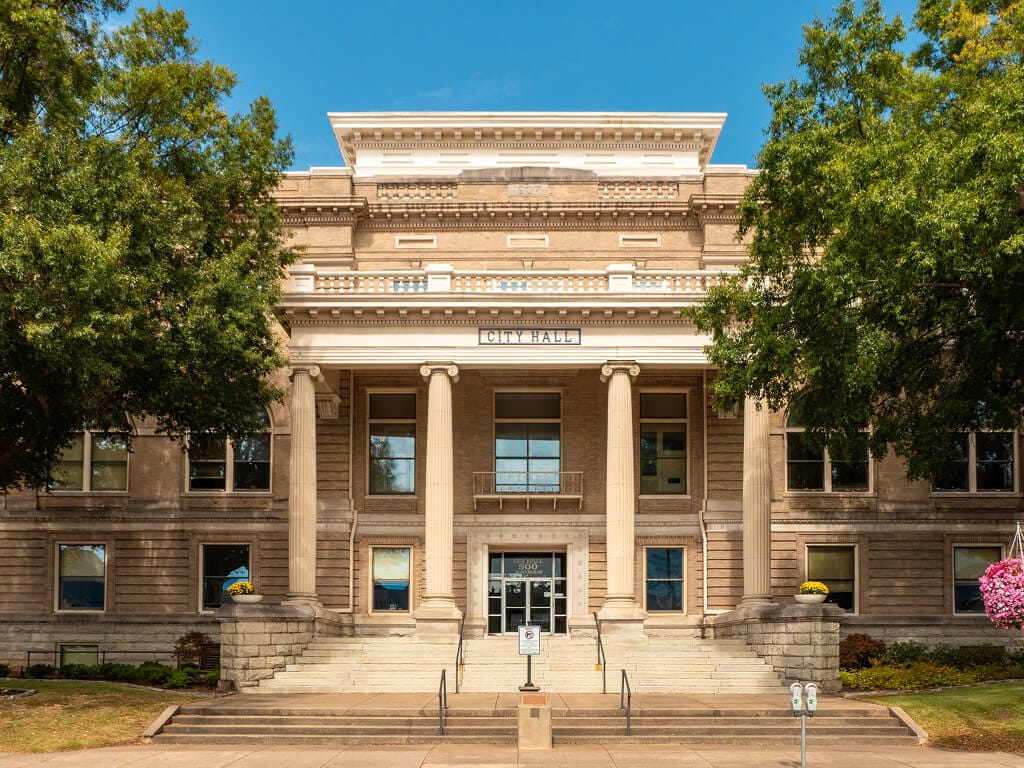
Public safety, long a defining issue in Arkansas’ capital city, is again at the center of debate as the election year begins in Little Rock. The city, which has for years been associated with elevated crime and homicide rates that have drawn national attention, is once again under scrutiny.
Mayor Frank Scott Jr., a Democrat and Little Rock’s first popularly elected Black mayor, has pointed to declining crime figures during his tenure. Those claims are now being challenged by Little Rock Vice Mayor BJ Wyrick, the wife of a former Republican state legislator, who has announced her candidacy for mayor and is disputing the city’s interpretation of its crime data.
Wyrick argues that Little Rock is not safer under Mayor Scott and says the city needs reforms and greater investment in public safety. As her campaign gains momentum, the dispute over crime statistics is quickly emerging as one of the defining issues of the mayoral race.
Mayor Highlights Crime Declines
At a press conference on December 19, Mayor Frank Scott Jr. and Little Rock Police Chief Heath Helton said that overall crime in the city had declined by 27 percent over the past five years. They also reported that homicides were down by 47 percent. Scott later noted that the homicide reduction figure was closer to 37 percent after at least three additional homicides occurred between the press conference and the end of the year, bringing the total number of homicides in 2025 to 44.
“We’re seeing very good, positive numbers as it relates to the crime reduction of violence here,” Scott said at the time.
Scott reiterated those claims in an end of year public safety update, framing the figures as evidence of sustained progress.
“I’m overjoyed to report that yet again, we are seeing very good and positive numbers as relates to the crime reduction of violence here in Arkansas,” Scott said. “Over the past five years, overall crime in Little Rock has decreased by 27 percent, with violent crime down by 21 percent. Just in 2025, there has been a 21 percent drop in overall crime and a 12 percent reduction in violent crime. Homicides have decreased by 47 percent over the past five years.”
Scott also credited community based programs, along with the leadership of Police Chief Heath Helton and the Little Rock Police Department, for contributing to the decline in crime.
That emphasis is reflected in the city’s 2026 budget, which prioritizes public safety. The budget provides a 5 percent pay raise for police and fire personnel, making Little Rock’s municipal workforce the highest paid in Arkansas, and allocates nearly $1 million for technology to support the city’s real time crime center.
Vice Mayor Challenges the Numbers
Wyrick has pushed back sharply against the mayor’s message. In a Facebook post made public the day before her comments to the media, she said that while some categories of violent crime may be down, homicides are up 16 percent compared with last year, when the city recorded 37 killings.
She also argued that the true number of homicides in 2025 may be closer to 50, saying some deaths were not classified as FBI reportable homicides, including fatal motor vehicle incidents. Since the debate began, Wyrick has repeatedly raised concerns about underreporting.
“The numbers that are out there and you look at what the city’s reporting, then you actually don’t get a true picture,” Wyrick told KATV. “Every time he does a press conference and says that we’re down this, we’re down that, we have an uptick in crime. It’s more about his presence in the community telling people that we’re better, but the community does not feel better. They do not believe what he’s saying.”
Wyrick has also broadened her criticism, arguing that city services have declined over the past two years and that public safety goals have not been met.
“Frank was elected in 2019. One of his platforms was to hire 100 police officers. Currently we are 51 police officers down from 2019,” she said.
She also faulted the city for failing to provide enough police vehicles for the Little Rock Police Department.
“It was not in the budget, so it didn’t get taken care of. It’s been pushed down the road,” Wyrick said.
At the same time, Wyrick acknowledged that the city’s 2026 budget includes a 5 percent pay raise, sign on bonuses for police officers, and nearly $1 million for the department’s real time crime center.
Beyond funding, she said she would take a different approach to enforcement if elected.
“I would make sure that we followed all the laws on the books for crimes. I don’t think they’re followed all the time. I think police officers have been asked to stand down,” Wyrick told KATV. “I would support the police officer, I would support the police chief, and let them do their job.”
Wyrick Signals a More Aggressive Approach
Little Rock Vice Mayor BJ “Brenda” Wyrick has announced she will run for mayor in the city’s nonpartisan election on Nov. 3, 2026.
“I’m running for mayor because this is my home,” Wyrick said. “It’s where I’ve raised my family, served our community, and fought to make our neighborhoods safer and stronger. I love Little Rock, but our city is at a crossroads. After years of disorder, decline, distrust, and a failed vision, it’s time for change.”
Wyrick said her campaign will focus on what she described as the fundamentals of city government, with an emphasis on public safety, street conditions, parks, and neighborhood cleanliness.
“We have to get the basics right to restore trust in city government and bring people together from every corner of this city to build the Little Rock we want,” she said. “We don’t need more empty promises or flashy marketing. This campaign is about solutions, not slogans.”
If elected, Wyrick said she would work to fill open police vacancies, double the number of community resource officers, and enforce existing city codes and ordinances. She also pledged to prioritize economic development by recruiting new industries, working closely with local businesses, and reducing barriers to job growth and private investment.
Her platform also includes creating a “pothole patrol” to identify and repair damaged streets, increasing city investment in infrastructure, and pursuing reforms and additional funding for the parks department, including War Memorial Park. She said improving government transparency and uniting city leaders and residents around a shared vision would be central goals of her administration.
An Election to Watch
The mayoral race in Arkansas’ capital city is shaping up to be one of the most closely watched local contests in the state. Little Rock, the most populous city in Arkansas, carries political significance that extends beyond its nonpartisan ballot, with partisan alignments often evident beneath the surface. For Democrats in particular, holding the capital city has long been seen as symbolically and strategically important.
The most recent Little Rock mayoral election was held on Nov. 8, 2022, when Mayor Frank Scott Jr. sought a second term. He was challenged by businessman Steve Landers, the owner of the state’s largest chain of car dealerships. Scott won reelection with 49.8 percent of the vote to Landers’ 40 percent, narrowly avoiding a runoff.
As the 2026 race begins to take shape, early exchanges between candidates suggest that crime and public safety will once again dominate the conversation, setting the stage for a closely contested and closely watched election in the capital city.