In a One Party State, Libertarians Try to Build a Real Alternative
In a state shaped by one-party dominance, Libertarians aim to create real competition and broader voter choice.
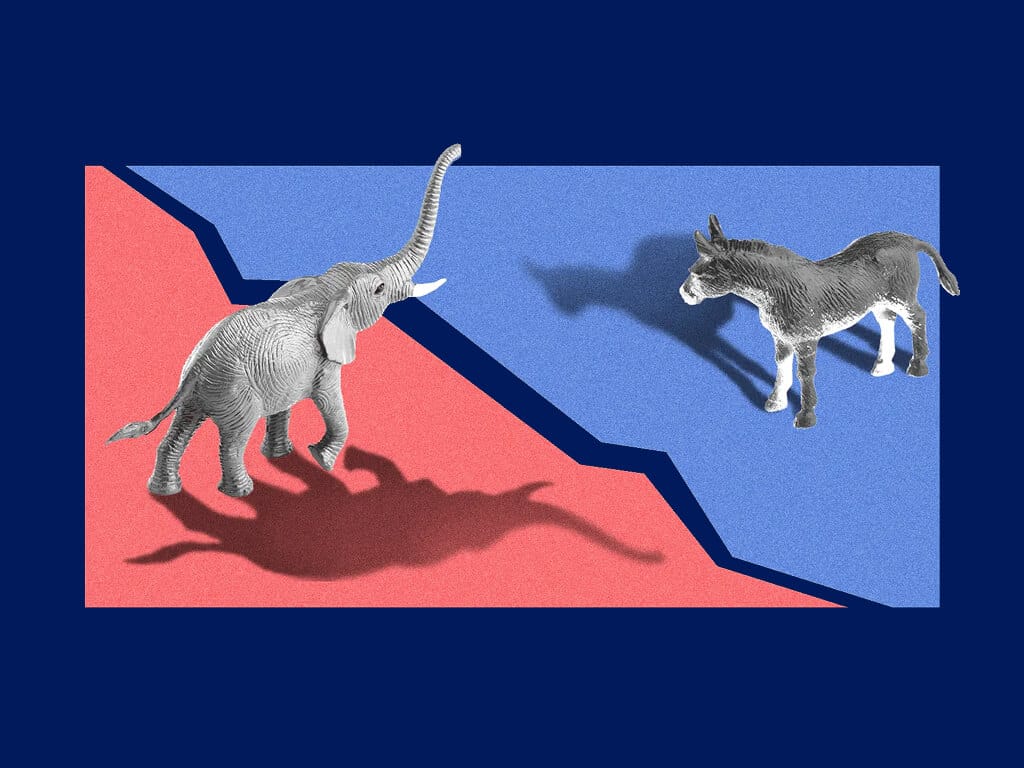
Calls for broader political choice have echoed across the United States, and in Arkansas that demand presses against a political culture long shaped by one party at a time, Democratic dominance through much of the last century, followed by Republican control in the 21st. For decades, competition was limited, alternatives were rarely treated as viable, and many elections became predictable, defined more by symbolism than by genuine contest.
Against that backdrop, the Libertarian Party of Arkansas has emerged as a growing third-party presence, building a wider organizational footprint and a broader slate of candidates. This expansion has positioned the party as a credible alternative in races that might otherwise go uncontested.
Aligned with a socially liberal and fiscally conservative platform, the party advocates for the legalization of drugs, a non-interventionist foreign policy, and strong gun rights. It gained increased support in federal races during the 2010s, driven in part by the absence of Democratic candidates in many contests, and that momentum now carries forward into the 2026 election cycle.
2026 Convention and Candidate Nominations
At its annual convention on Feb. 22, members of the Libertarian Party of Arkansas formally nominated candidates for the 2026 general election, finalizing a statewide slate that spans federal, state, county, and local offices across Arkansas.
For federal offices, the party nominated Jeff Wadlin of Bentonville for U.S. Senate; Steve G. Parsons of Lakeview for U.S. Congress District 1; and Bobby Wilson of Bentonville for U.S. Congress District 3.
The statewide executive slate includes Colt Shelby of Cecil for governor, Michael Kalagias of Rogers for lieutenant governor, Michael Pakko of Roland for secretary of state, and Christopher Olson of Viola for commissioner of lands.
At the county level, nominees include Greg Maxwell of Dover for Pope County judge; Justice of the Peace Mark Simino of Calico Rock for Izard County judge; and Debra Brown of Oxford for Izard County clerk.
For the Arkansas House of Representatives, the party nominated Hunter Jackson of Van Buren for State House District 48, Garrett Sheeks of Stuttgart for District 61, Jocelyn Fry of Searcy for District 58, and Daniel Stuckey of Little Rock for District 80.
Additional local and county nominations include Jacob Stone of Benton for Saline County JP District 8; Cody Martin of Gentry for Benton County JP District 11; Brian Leach of Centerton for Benton County JP District 15; Frank Gilbert of Little Rock for constable in Pulaski County’s Big Rock Township; and John Fenley of Pine Bluff for Pine Bluff City Council Ward 1.
Leadership and Strategy
Michael Pakko leads the state’s most prominent alternate party. He serves as chief economist and state economic forecaster for the Arkansas Economic Development Institute at the University of Arkansas at Little Rock and as chairman of the Libertarian Party of Arkansas.
Pakko said the party is working on a long-term strategy and it is centered on consistent presence rather than short-term electoral wins.
“We have admittedly had limited electoral success, but our candidates have given the voters choices that they otherwise wouldn’t have, often as the only alternative to the incumbent, and there has been a growing recognition and expectation that the Libertarians will be a participant in the state’s elections,” Pakko said. “Part of our strategy has been to have Libertarian candidates regularly appear on every ballot in the state, building our name-recognition and brand over time.”
He acknowledged the difficulty of competing in high-profile races.
“It’s tough to break through the hype and enthusiasm that pervades those top-of-the-ticket contests. But Libertarian candidates have consistently earned voter recognition in other statewide races. Just last year, I personally ran as the Libertarian candidate for state treasurer. In a three-way statewide race, I received nearly 50,000 votes.”
“Further down-ballot, our candidates in 2024 did exceptionally well, with vote percentages as high as 35 percent in state legislative races and 47 percent in races for justice of the peace. Two Libertarian candidates were elected to offices of township constable.”
In Pulaski County, Frank Gilbert earned over 43,000 votes, winning his race with 58 percent. In Van Buren County, Thomas Turcol also won his election with nearly 58 percent of the vote.
Ballot Access and Party Status Laws
The central issue, according to party leadership, is how Arkansas defines an established political party.
“The key issue is the definition of an established political party in Arkansas. The election laws provide an avenue for new political parties to form. It’s not an easy process, but it’s possible. Only two parties, the Green Party in 2006–2014 and the Libertarian Party in 2012–2026, have qualified.”
Pakko noted that neither party has surpassed the 3 percent threshold for governor or president in any of those elections.
“It’s difficult to persuade voters to overcome the perception of binary choice that is ingrained in our system and in our mindset, especially at the top of the ticket.”
He also described structural limits on presidential races.
“The presidential vote criterion is particularly problematic. As in any national political party, the LPAR has only limited input on the selection of our party’s presidential candidate, about 1 percent of the vote at the national LP convention. We have always supported our party’s nominee, but his or her success is not a very relevant measure of our impact on Arkansas politics, overall. Why should that be the sole criterion for being a political party in Arkansas?”
The Libertarian Party of Arkansas has consistently pushed for legislative reform of party qualification laws in Arkansas. Party leaders argue that a political party should be able to retain ballot access by earning at least 3 percent of the vote in any statewide race. Because some election cycles include no statewide contests other than the presidential race, they propose that ballot retention should extend across two full electoral cycles rather than a single election.
Pakko said the proposal mirrors systems used in other states, including Oklahoma, with a 2.5 percent threshold, and Missouri, with a 2 percent threshold.
The party also supports broader election reforms.
“We also favor other reforms to the election process to make multi-party elections more feasible, for instance, the adoption of ranked-choice or other alternative voting methods.”
The Role of Libertarian Candidates
Party leaders openly acknowledge that winning statewide office remains unlikely in the near future. Still, they frame the party’s short-term goal not as victory, but as long-term viability and continued access to the ballot.
Michael Pakko said it is highly unlikely that the next governor of Arkansas will be a Libertarian. He added that if the party’s candidate reaches the 3 percent threshold, the Libertarian Party will automatically qualify for the 2028 ballot, removing the need to go through the petitioning process again.
Pakko said the party’s message to voters is about impact rather than protest voting. “We need to make the case that a vote for a Libertarian can have far more meaning than a symbolic vote for one of the two major party candidates, especially when the outcome of that contest is rarely in doubt.”
He also emphasized the party’s role in races that often go uncontested. “One thing we will provide is an electoral challenge in districts that otherwise would not have one. We do not target those races deliberately. Our candidates run in the districts where they live, but the reality is that many districts only attract a single major party candidate.”
Party data show how widespread that pattern has become across Arkansas. In the state House of Representatives, only 32 seats will be contested in the general election, with 54 Republicans and 14 Democrats already set. More than two thirds of voters will have no real choices on their ballots in November without Libertarian challengers.
Of the 68 uncontested House races, 41 Republicans and 13 Democrats face no primary challengers. In total, 54 state representatives will never be required to receive a single vote. Payment of a filing fee to their respective parties effectively replaces facing voters in either a primary or general election. Of those 54 candidates, 46 are incumbents.
The same pattern appears in the state Senate. Only 4 of 17 races, about 24 percent, will be decided in November. The remaining seats are already allocated to Republicans (10) and Democrats (3). More than three quarters of Arkansas voters will have no general election choice for state senate without Libertarian candidates.
Of the 10 Republican senate seats already decided, 6 face no primary challengers. Of the 3 Democratic seats, 2 face no primary challengers. That leaves 8 of 17 senators, or 47 percent, selected without ever facing voters, including 7 incumbents.
In statewide races, only 2 of 7 constitutional offices will be contested in November. Four offices have incumbents facing no opposition, and one race, land commissioner, will be decided in the March 3 primary election.
“This is not a democratic process where voters choose their representatives,” Pakko said. “This is a gerrymandered, pay for play system that has already locked in party control of nearly 70 percent of all legislative districts, with 43 percent of legislators already ‘elected’ simply by paying filing fees.”
He added that these candidates will face no opposition in either the primary or general election unless Libertarian candidates step forward. Libertarians have appeared on the ballot in every Arkansas general election since 2012, and the current cycle marks the eighth consecutive election in which the Libertarian Party of Arkansas has qualified as a new political party.
An option, party leaders argue, remains an option.