In House District 70, a March Special Election Puts Democratic Fortunes in Focus
Arkansas voters in House District 70 will choose between Democrat Alex Holladay and Republican Bo Renshaw in a March special election that could signal broader political shifts in the state.

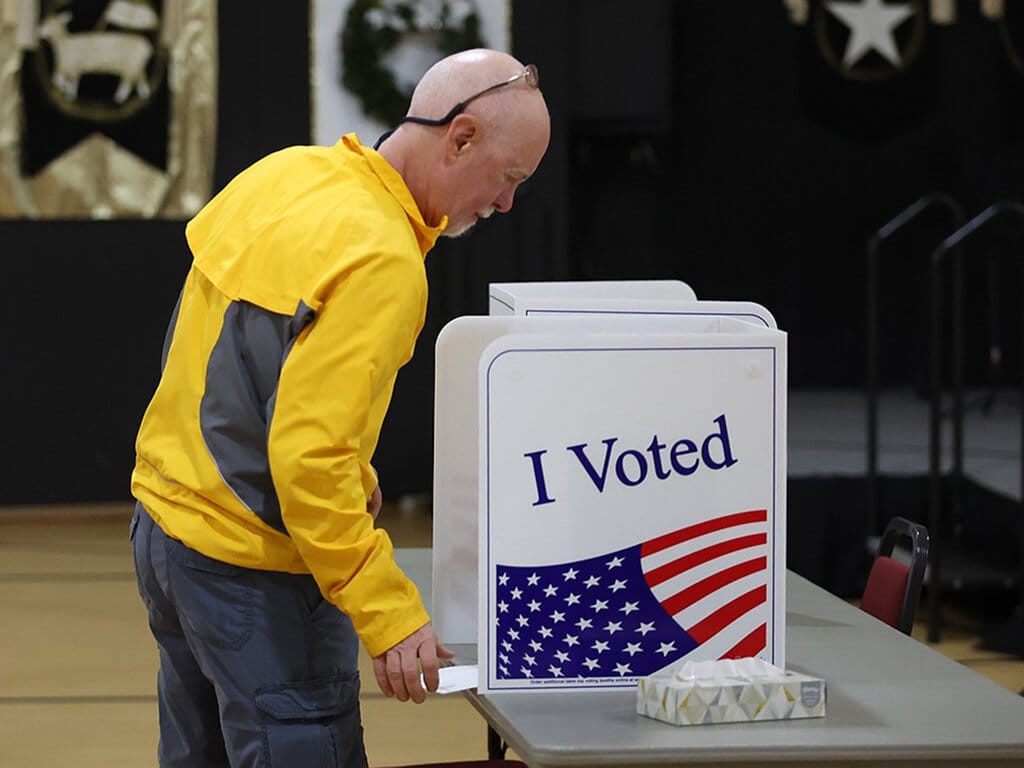
Voters in Arkansas House District 70 will head to the polls in March to choose who will represent the North Little Rock area in a special election. The contest features two well known local figures, Democrat Alex Holladay and Republican Bo Renshaw. Beyond the matchup itself, the race is drawing attention as a possible indicator of broader political momentum in Arkansas. District 70 is one of the few remaining legislative seats where both parties believe they have a realistic path to victory. As Democrats attempt to rebuild under new party leadership and Republicans continue to dominate statewide offices, the outcome could offer insight into whether Arkansas politics are settling into a firmly Republican alignment or leaving room for a Democratic recovery.
A District With High Stakes
House District 70 includes much of North Little Rock, part of Sherwood, and the Camp Joseph T. Robinson military base. Both candidates have lived in the area for decades and describe deep ties to the community. Holladay is a health care administrator, and Renshaw is also a health care professional.
Holladay secured the Democratic primary last week with nearly 80 percent of the vote, defeating Cordelia Smith Johnson, an Air Force veteran making her first bid for public office. Smith Johnson’s name will still appear on the March 3 ballot for the full term election, where Holladay will again represent the Democratic Party. Renshaw is unopposed on the Republican side and will face the Democratic nominee in March.
Holladay’s Return Bid
The special election was triggered by the resignation of Carlton Wing, who stepped down to take a leadership role with Arkansas PBS. Holladay was the Democratic candidate who challenged Wing in 2024 and narrowly lost.
In that election, 14,796 votes were cast. Holladay received 7,255 votes, or 49 percent, while Wing secured 7,541 votes, or 51 percent. The margin was fewer than 300 votes. Holladay said he believes the dynamics of the race have shifted. Wing is no longer on the ballot, Holladay says he is more familiar to voters, and he does not believe the same pro Trump wave that influenced the previous election is present this time.
“It’s like a battle scar,” Holladay said. “Yeah, I did this before, and it worked, they remember me.”
Campaign Messages and Voter Concerns
With the election less than two months away, both candidates say they are focused on listening to constituents and addressing local concerns.
“We’re listening to what matters. Matters to people,” Holladay said. “They want better schools, they want safer streets. They want a better future, healthcare outcomes. They want those things. So, we’re listening to folks, and we’re going to campaign on the same thing.”
Holladay emphasized his personal connection to the district and the economic pressures many residents face.
“I’m just like you. North Little Rock,” he said. “I think, honestly, it should be easier. My wife and I work very hard, and it’s difficult sometimes, and I know it’s a lot more difficult for other folks in our community. So that’s our message. I want to work for you. I really do.”
Healthcare has emerged as a central issue in the race, particularly concerns about Medicaid. Holladay said he worries about how potential cuts could affect the district’s elderly population and described the system as overly complicated.
“My dad is currently on long-term hospice,” Holladay said. “Navigating that process is a nightmare, and I’m a professional.”
Upcoming federal changes to Medicaid include work requirements and higher out-of-pocket costs for enrollees. According to KFF, Medicaid expansion states such as Arkansas could see a 14 percent drop in enrollment.
He pointed to frustration with the LEARNS Act, the 2023 law that created a school voucher program allowing state funds to be used for certain private school and homeschooling expenses. Holladay said the state needs stricter guidelines on how voucher money is spent and should ensure an equilateral education for Arkansas children, regardless of where they live or what type of school they attend.
Affordability has also surfaced as a key concern. Holladay supports expanding access to pre K and has expressed support for the child tax credit on his campaign website. He said voters often raise objections to Gov. Sarah Huckabee Sanders’ proposal to build a multimillion dollar, 3,000 bed prison while many residents struggle with everyday expenses.
“I’ve been surprised by the number of voters that bring it up,” Holladay said. “I don’t even ask. They just bring it up because one of our campaign taglines is, ‘What matters to you?’”
Renshaw, the Republican nominee, said he also plans to focus on healthcare while emphasizing education and public safety.
“Any issues that arise with education, I know we need to be able to continue to grow educational issues in the state, and so I’m looking forward to that,” Renshaw said. “And we need safety. We need safety in our community, safety in the state.”
He described himself as a practical candidate with strong local roots.
“I’m a commonsense person. I’m a healthcare professional that loves his community, that loves the people in this community,” Renshaw said. “They know me, they see, you know, we serve in this community. They deserve common sense leadership in North Little Rock and Sherwood, and I know I can help with that.”
A Race Watched Beyond the District
Competitive legislative districts are increasingly rare in Arkansas, where most seats now lean strongly Republican, with fewer remaining Democratic strongholds. Races like District 70 offer one of the few opportunities to gauge the state’s political pulse. Because of that, the district has taken on added significance for both parties, particularly for Democrats seeking to understand whether change is possible or whether Republican dominance will continue.
Supporters on both sides view the outcome as a signal. A Democratic win could suggest renewed competitiveness and lingering voter dissatisfaction with recent political trends, while a Republican victory would reinforce the perception that Arkansas has completed its transition into a reliably red state.
As the March special election draws closer, voters in District 70 will be considering not only the choice between two candidates, but also the broader direction they want for their community and for Arkansas as a whole.