
Fort Smith Port to Rebuild and Expand Rail Operations With $8.1M Federal Grant
A $8.1 million federal grant will rebuild flood-damaged infrastructure at the Fort Smith Port and expand rail freight operations, strengthening regional trade, logistics, and economic growth.

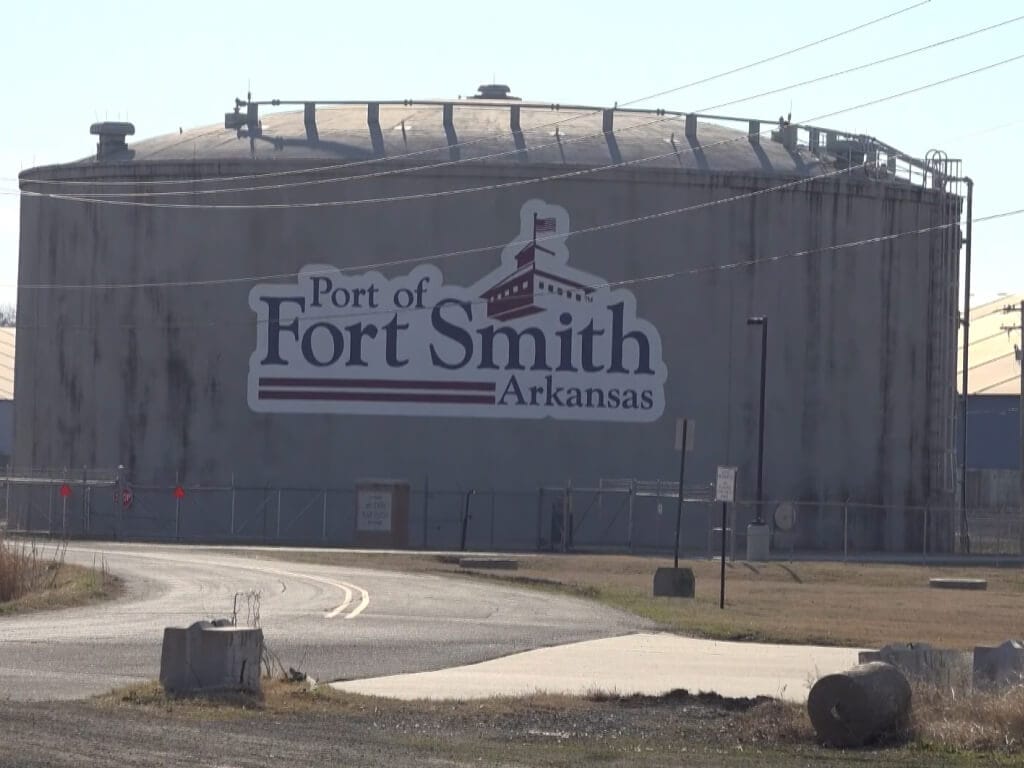
In Arkansas, rivers have long shaped the map of growth and commerce, and Fort Smith is no exception. The city’s fortunes have always been intertwined with the Port of Fort Smith, a working riverfront that helped turn a frontier town into a regional hub. When storms and flooding devastated the port, the damage rippled outward, touching nearly every corner of the community.
Now, after the destructive 2019 flood, Fort Smith is rebuilding with the help of a major infusion of federal support. An ambitious expansion is underway to reconstruct flood damaged infrastructure and enlarge rail freight operations. The project will restore critical facilities lost to the floods and expand the port’s reach into freight markets across 17 western states.
A Port With a Central Economic and Transportation Role
Fort Smith is situated on the Arkansas Oklahoma state border in the Arkansas Valley, at the confluence of the Arkansas River and Poteau rivers, also known as Belle Point. The third biggest city in the state has long served as a regional manufacturing center, with major plants operated by Rheem, Trane, Georgia Pacific, Gerber, Kraft Heinz Company, and others. The city is also home to several major corporations, all closely connected to the port’s logistics and transportation network.
The port and the city are served by the Kansas City Southern Railway through a branch connection on the mainline at Poteau, with connections to other railroads at Kansas City and New Orleans. The regional Arkansas and Missouri Railroad directly serves Fort Smith and provides connections through the St. Louis and Memphis gateways to the east. The Fort Smith Railroad provides local switching service to a variety of businesses and provides haulage for the Union Pacific Railway through its connection at Van Buren.
Together, the port and transportation network form the backbone of the city’s and region’s economy. That is why local leaders and port officials see sustained infrastructure investment as essential to Fort Smith’s long term growth and regional development, a momentum that is now clearly accelerating.
Rebuilding After the 2019 Floods
The 2019 flood was catastrophic for Fort Smith. Record flooding along the Arkansas River, part of the McClellan-Kerr Arkansas River Navigation System, in May and early June submerged more than 2,100 parcels of land and inundated over 500 homes and businesses in the city alone.
Commercial barge traffic on the river was shut down, costing Arkansas an estimated $23 million per day in lost economic output. The river crested in the Fort Smith area on May 29 at 40.26 feet, nearly double the flood stage of 22 feet and well above the previous record of 38.1 feet set in May 1945.
Rebuilding has been slow, deliberate, and sustained. The city’s port authority has worked to restore the 28 acre port facility after it was largely destroyed in the historic flood. By 2024, more than $6 million had been spent on restoration, supported by a mix of grants, insurance proceeds, and funding from the Federal Emergency Management Agency.
Additional investment followed. In 2024, the Arkansas Waterways Commission awarded the port a $500,000 grant to help finance a $1.7 million, 30,000 square foot bulk storage warehouse. In 2025, the commission approved another $1.8 million grant to build a 20,000 square foot warehouse and a large concrete storage pad with perimeter walls for bulk products.
The latest infusion of funding, an $8.1 million federal grant, was recently approved through multiple federal appropriations packages and backed by U.S. Senator John Boozman. Together, the investments mark a decisive shift from recovery to long term reconstruction, positioning the port not just to reopen, but to reemerge stronger, larger, and more strategically connected to regional freight networks.
Expanding Rail Freight Capacity
Among the announced projects tied to the new funding, the planned expansion is expected to create new opportunities for the port and for businesses across the region, while also reducing highway congestion by shifting more freight movement to rail transport.
“This is all tied to rail infrastructure,” Marty Shell, president of Five Rivers Distribution, said. His company operates and manages the Port of Fort Smith, handling intermodal warehouse operations and truck rail barge transfers, while leading major modernization efforts. “It’s for us to be able to move more rail cars, more rail volume through the port of Fort Smith. We get close to 1,000 rail cars through here a year, and each car can hold 100 tons, so to do that, expand rail use, we’ll need more warehouse space.”
“These capital improvements help us supply cheaper freight to customers in 17 or 18 different Western states,” Shell said.
Shell said rail cars typically transport products made or consumed in the United States, while barges tend to carry a mix of domestic and international goods. Primary products delivered to the port by rail include bulk feeds, feed supplements for poultry and cattle, and wire coils used in manufacturing.
Infrastructure, Distribution, and Regional Growth
Shell said the grant has been in development for two years and will fund the construction of three new warehouses, adding 90,000 square feet of storage to the port’s existing 120,000 square feet.
He said the project is currently in the design phase, and a precise construction timeline has not yet been finalized. Once construction begins, he expects the process to take about six months.
“This site that you see here is about four or five acres, cleared, built up, ready to go, and this is where the future home of the $8.1 million will be spent,” Shell said.
The project will also include new truck parking facilities to support the growing distribution network. Shell described the development as a “well deserved investment” that is expected to benefit the region for generations.
He said the project aligns with other major regional developments, including the F 35 mission and the I 49 bridge project, further strengthening economic growth and transportation infrastructure.
Shell emphasized the broader importance of the investment, calling it a “game changer.”
“I was very excited, not only for the city of Fort Smith and the Fort Smith Port Authority but also for our region because these dollars could have gone anywhere inside the United States,” Shell said.
Funding Requirements and Timeline
Construction is slated to begin by late 2026 and is expected to be completed by late 2027. The federal funding requires a 20 percent local match, meaning the city’s port authority must raise $1.62 million.
Shell said he is working with city staff, the Arkansas Waterways Commission, and other partners to secure the required match.
“We’ll have to look under a lot of rocks, but it’s out there and we’ll get it,” Shell said.
With that political and institutional support in place, the recovery and expansion of the port and the city are expected to continue moving forward.