New Data Center Hub Coming to Little Rock With $6 Billion Investment, Largest in State History
A Connecticut based company plans a 6 billion dollar data center campus near Little Rock, marking the largest investment in Arkansas history and signaling the state’s growing role in cloud computing and artificial intelligence infrastructure.

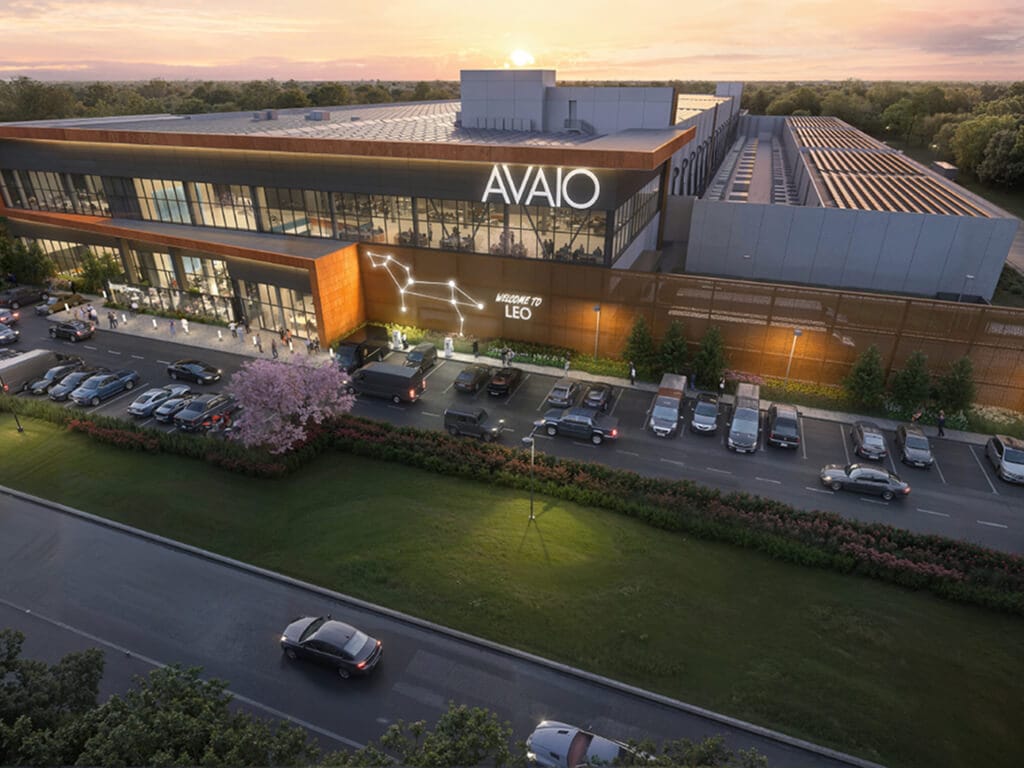
Arkansas’s push into data driven industries took another significant step forward this week, as a Connecticut based company unveiled plans for what it is calling the largest private investment in the state’s history. AVAIO Digital Partners announced Monday that it will build a $6 billion data center campus just outside Little Rock’s city limits, adding Arkansas to the growing list of states competing for large scale digital infrastructure.
The announcement has been welcomed by business leaders and state officials, who see it as a step toward positioning Arkansas as a technology hub. At the same time, the news has sparked both curiosity and concern among many residents about the changes that may take place around them.
The AVAIO Digital Leo Project
AVAIO Digital is a data center operator and developer specializing in artificial intelligence, high performance computing, and hyperscaler data center clients. The company’s new development, called AVAIO Digital Leo, will be located off 145th Street, south of Little Rock. The 760-acre campus will house computing, networking, and data storage technologies, along with the power infrastructure needed to support cloud computing and artificial intelligence applications.
The company plans to lease the site to one or more large-scale computing companies, known as hyperscalers, which will use the facility for functions such as artificial intelligence processing and cloud services. AVAIO said it chose the location for its proximity to downtown Little Rock, access to an educated workforce, and fiber infrastructure along Interstate 530 and 145th Street. This fiber access provides the site with two grid connections, a feature the company says is especially attractive to potential tenants.
The campus is expected to create more than 500 full-time permanent operations jobs over the next five years as construction progresses. The construction phase is also anticipated to generate thousands of additional jobs throughout the region.
Construction is expected to begin this year, with the facility scheduled to come online in 2027. The first phase of the project is slated to begin in the first quarter of 2026 and to be completed and energized by June 2027.
Mark McComiskey, the chief executive officer of AVAIO Digital, said the company intends for the 760 acre site near Little Rock to serve as a major center for data center capacity and a driver of long term economic and technological growth in Arkansas. He said the project will involve a first phase investment of $6 billion, with more than $21 billion expected over the full buildout, and noted that a development of that scale depends on strong community support and partnerships. McComiskey added that the company is grateful to Gov. Sarah Huckabee Sanders, Secretary of Commerce Hugh McDonald, and Entergy Arkansas for their role in advancing the project.
Gov. Sarah Huckabee Sanders said the $6 billion data center hub represents the largest economic investment in Arkansas history and positions the state to compete nationally as a technology center. She said legislation passed last year reduced regulatory timelines for new energy projects by more than half and created new incentives for data center investments, and added that the announcement reflects how cutting red tape and fostering a pro business, pro growth environment can attract major companies and strengthen the state as a place to live and work.
Energy Concerns and Legislative Context
Energy concerns have arisen alongside the announcement of the project. Initially, AVAIO Digital Leo is expected to use 150 megawatts of power each year, but as the campus grows, consumption could reach up to 1 gigawatt, roughly equal to the electricity use of 750,000 homes.
The company has secured a contract with Entergy Arkansas for the initial 150 megawatts but expects demand to rise significantly as the facility expands. The surge in data center projects in Arkansas follows the passage of Act 373 of 2025. The law shortens permitting timelines for new power generation projects, while critics argue it reduces oversight and allows utility companies to recover costs from customers for projects that have not yet been built.
Across the country, the rapid growth of data centers has drawn scrutiny because of the enormous energy demands required to support artificial intelligence and cloud-based services. These concerns have become more pressing as electricity costs have climbed, with national energy bills rising nearly 30 percent between 2021 and the end of 2025.
Noise, Water, and Community Impact
To address noise concerns often associated with data centers, the project will include vegetative buffers and sound-reducing walls. The buildings are planned to sit roughly 600 feet from the property line and will be surrounded by wooded areas, with the first structure located several hundred feet from the nearest residence.
Because data centers require continuous cooling, AVAIO Digital plans to install chiller systems similar to large air conditioners. Nesel said these chillers will be designed to operate at low ambient noise levels.
According to sound tests conducted by the company, noise from the facility will not exceed current ambient levels at the property boundary. “We want to be good neighbors first,” Nesel said.
The company has also coordinated with Central Arkansas Water to ensure the site has sufficient water resources to support the facility.
The project has not received any public financial contributions, Nesel said. Financing will come from AVAIO Digital, with investors providing 20 percent of the costs and debt covering the remaining 80 percent, which will be repaid through the project’s cash flow.
The development is utilizing a new state law that permits deductions on sales and use taxes for data center equipment. A property tax abatement is also possible but has not yet been approved. To engage the community, AVAIO Digital plans to work with the Little Rock Regional Chamber’s Academies of Central Arkansas program to connect with local high school students. The company also intends to partner with technical and community colleges to create training programs for future employees.
Arkansas’s Growing Data Center Footprint
The Little Rock project marks the fifth large-scale data center announced in Arkansas. In October, Google revealed a $4 billion data center investment in West Memphis, which is already under construction. Like AVAIO, Google plans to source power from Entergy. Three additional data center projects are also underway in Little Rock, Conway, and Clarksville, though the companies behind these developments have not been publicly disclosed.
AVAIO Digital is considered a strong partner for Arkansas as the state works to expand its presence in the data-driven economy. The company’s portfolio includes three data centers in Virginia, as well as facilities in California, Mississippi, Texas, Ireland, and Spain, demonstrating both experience and credibility.
The scale of these investments naturally draws public attention and questions. State authorities face the task of addressing these concerns to keep residents informed and engaged, ensuring that unease or a sense of separation from the decision-making process does not persist.