
As Cotton Prices Slide, Arkansas Farmers Face Hard Choices in 2026
Falling cotton prices and rising costs are forcing Arkansas farmers to reconsider planting decisions for 2026, with some acreage likely shifting away from cotton as market pressures mount.

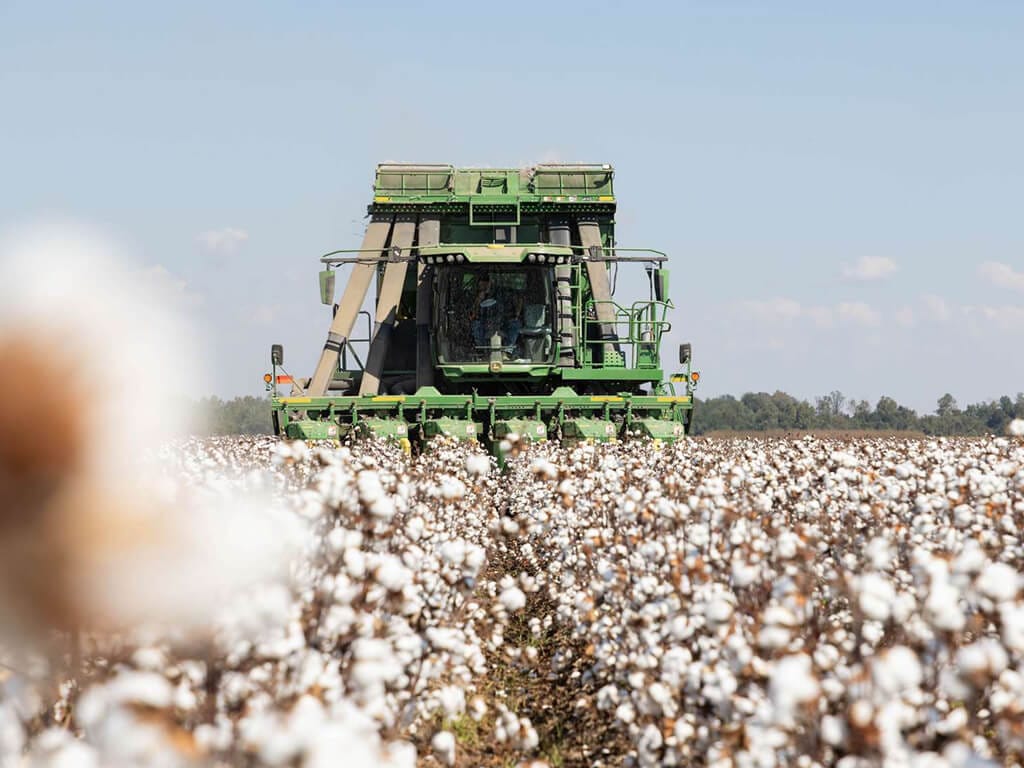
The United States exports more cotton than any other country in the world, even as it ranks third in total production behind China and India. Arkansas is a major contributor to that export strength and remains one of the nation’s most important cotton producing states. It ranks fourth in lint yield per acre, third in total cotton production, and fourth in acres planted. For much of the past decade, those standings reflected steady growth and improving productivity. Recently, however, that momentum has begun to slow, and the trend has turned in a less favorable direction.
Cotton acreage in Arkansas fell sharply in 2025, and industry experts say the decline could continue into 2026. The shift follows a historic expansion just one year earlier. In 2024, cotton acreage in the state surged by 27 percent, or 140,000 acres, reaching 650,000 acres. That marked the highest level of cotton planting in Arkansas since 2011. Yields were also historic that year. Arkansas averaged 1,341 pounds of cotton per acre in 2024, the highest yield in the United States. Total production reached 1.788 million bales, an increase of 426,000 bales from 2023 and the highest total since 2007, according to the National Agricultural Statistics Service. Those gains now stand in stark contrast to the direction the market appears to be heading.
Prices Drive Acreage Decisions
The primary driver behind the recent decline in cotton acreage is price. Global uncertainty and rapidly shifting market conditions have weakened cotton’s outlook, as prices continue to slide while soybeans show signs of recovery. That widening gap is forcing farmers to rethink what they plant.
Scott Stiles, an economist with the University of Arkansas System Division of Agriculture, said the cotton market has provided little encouragement. “The cotton market has done nothing but trend lower,” Stiles said. “The high price for the December 2025 contract was 70.93 cents per pound in early April. Fast forward to November and the December contract traded as low as 60.79 cents. We’re now at the lowest price levels since the summer of 2020.”
Looking ahead, Stiles said December 2026 cotton futures are trading around 67 cents per pound. Soybeans, by contrast, appear to have gained momentum, particularly amid tariff related trade deal uncertainty, with November 2026 soybean prices hovering near eleven dollars per bushel.
“We need December cotton prices to be in the upper 80s to 90 cents for growers to cover their costs, so 67 cents isn’t going to excite anybody,” Stiles said. “It will take very strong yields and cost reductions somewhere to make that work. But if soybeans stay at this eleven dollar mark, it’s very likely we see some cotton acres shift to soybeans.”
Acreage Declines and Weather Challenges
According to NASS, Arkansas farmers planted 515,000 acres of cotton last year, down from 640,000 acres in 2024. Economic pressures were not the only challenge during the growing season.
Zachary Treadway, a cotton and peanut agronomist with the University of Arkansas System Division of Agriculture, said weather problems compounded the difficulties farmers faced. Heavy spring rains delayed planting across much of the state.
“We were behind the eight ball from the very beginning,” Treadway said. “And we knew after planting it would turn off hot and dry. A late crop that was stunted during peak bloom set us back in a year where we couldn’t afford to have a setback.”
Those conditions limited yield potential and increased risk during a season when profit margins were already thin.
Rotation Crops Offer Limited Relief
While cotton acreage has fallen, experts do not see the crop heading toward a full collapse. Instead, many growers are leaning more heavily on crop rotation as a way to manage risk and stabilize farm income.
One crop commonly rotated with cotton showed modest gains in 2025. Peanut acreage in Arkansas rose from 45,000 acres to 48,000 acres, according to the National Agricultural Statistics Service. “We had kind of the same story with our peanut acres,” Treadway said. “We faced similar planting problems, and the heat did not help. But harvest treated us pretty kindly with peanuts, and we did see a slight increase in acreage this year.”
Even with incremental improvement in rotational crops and the possibility that yields may come in better than initially expected, the broader outlook for cotton remains cautious. Many in the industry argue that relief will not come from the market alone and that intervention from political side is increasingly necessary.
For years, political leaders have promoted tariffs as a way to revive American manufacturing. Those arguments often came with promises that trade policy would protect domestic cotton producers and draw the U.S. textile industry back from countries such as Bangladesh and other low cost manufacturing centers. Yet even as major producers like China and India face tariff pressure, cotton price is not improving and Arkansas cotton growers continue to feel mounting strain.
Looking Ahead in 2026
“Survival mode” became a common refrain among farmers last year as the sector slid deeper into crisis, and many say that mindset is likely to carry into 2026. Declining prices, rising input costs, and uncertainty around trade policy have made long term planning increasingly difficult.
“Everybody’s in survival mode at this point and they’re looking at the best option,” Stiles said. “You may call yourself a cotton grower, but 67 cents will test your loyalty.”
Unless cotton prices stage a meaningful rebound, Arkansas is likely to see further reductions in cotton acreage in 2026, as growers continue to chase crops that offer a clearer path to profitability.