How Deep Is Arkansas State Police Involvement With ICE?
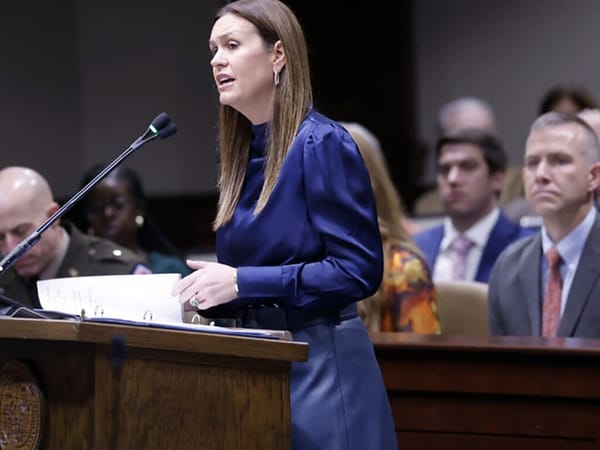
Arkansas lawmakers are pressing state police officials for details on how deeply the Arkansas State Police are involved with ICE, including training, detentions, costs, and the scope of immigration enforcement across the state.

Like much of the country, Arkansas has been drawn into a broader debate over immigration enforcement. Lawmakers are now examining how deeply the state has become involved in immigration enforcement and how closely the Arkansas State Police are working with U.S. Immigration and Customs Enforcement.
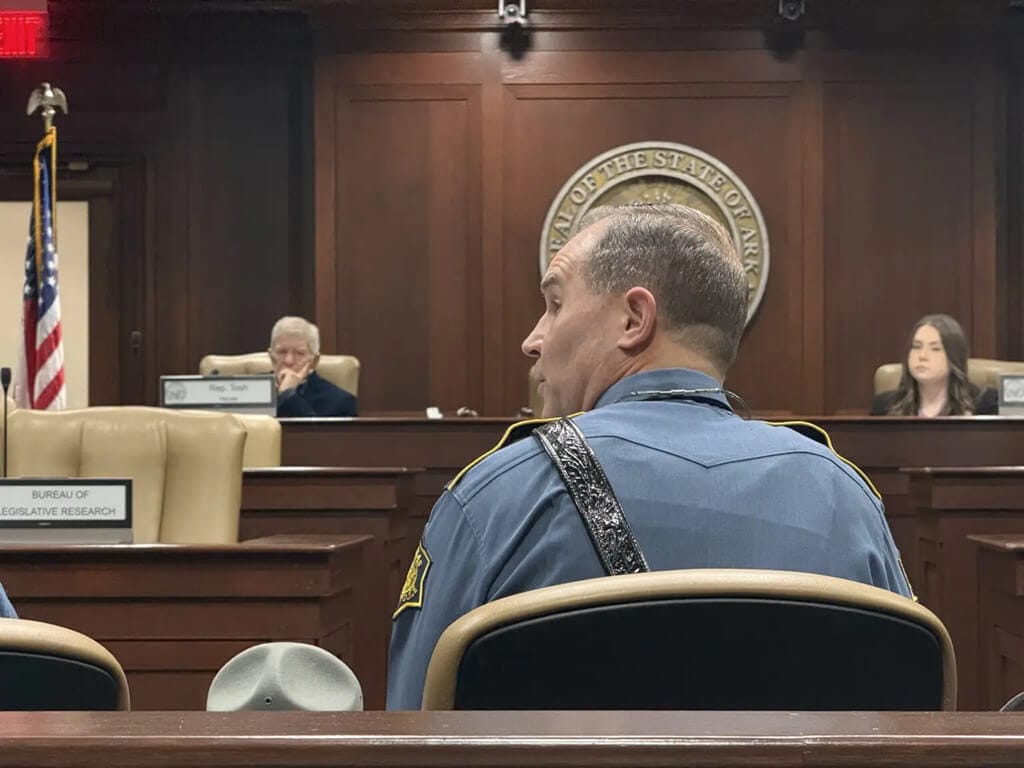
Those questions moved to the forefront Wednesday, when senior state police officials appeared before the Arkansas Legislative Council Game and Fish State Police Subcommittee. During the meeting, officials described the agency’s role in federal immigration enforcement and explained how Arkansas participates in a federal program and how that cooperation unfolds in everyday policing.
State Law Sets the Framework
Last year, Arkansas lawmakers passed the Defense Against Criminal Illegals Act, a law requiring state and local law enforcement agencies across Arkansas to participate in a long running federal program overseen by U.S. Immigration and Customs Enforcement. To put the law into action, Arkansas State Police entered into an agreement last summer with federal immigration authorities through the 287(g) Task Force Model program.
Under this program, ICE trains officers and grants them limited authority to assist with immigration enforcement. The agreement allows state police to notify ICE if troopers encounter someone during traffic stops, pursuits, investigations, or other routine policing who may be in the country illegally. ICE can then place an immigration detainer on that individual.
Since the law went into effect, the 287(g) program has been widely adopted across the state. On Wednesday, State Police Director Col. Mike Hagar told lawmakers that all but 12 state police troopers have completed the required ICE training, highlighting the program’s rapid implementation.
Costs and Reimbursement Questions
Sen. Joshua Bryant, a Republican from Rogers, raised concerns about costs during the committee meeting. With the fiscal session approaching, he asked whether expenses related to the program were being tracked for the Arkansas State Police and for county jails that hold immigrants for U.S. Immigration and Customs Enforcement.
Hagar said he believed county jails were being reimbursed, but he did not know the exact amounts. He also noted that troopers completed the 60‑hour training between regular calls for service during their shifts.
In an email, Arkansas State Police spokesperson Cindy Murphy added that the 287(g) training had been incorporated into troopers’ regular training requirements and that the agency is not seeking reimbursement from the federal government for those costs.
“It’s not had an impact on our agency as far as operations are concerned,” Hagar told lawmakers. He also noted that federal immigration resources in Arkansas are “very minimal,” with most of those resources dedicated to picking up immigrants from local jails and transporting them to federal immigration detention.
Concerns About Scope
Sen. Terry Rice, a Republican from Waldron, said he supports efforts to deport immigrants who have committed crimes but raised concerns about whether state police could assist federal authorities in detaining immigrants who do not have criminal histories.
“Is there anything outside of your daily work that y’all are doing currently in coordination with federal agencies, Homeland Security, ICE, as far as going out and just seeking anything more than people with criminal charges?” Rice asked.
Hagar said the agency is not participating in any operations like those described by Rice.
He told lawmakers that troopers have been instructed to distinguish between immigrants who were brought to the United States as children and have no criminal history and immigrants who are arrested for crimes.
“We’ve explained to them that we expect them to use good judgment and common sense discretion that they have under the law,” Hagar said. “And we trust that they’re going to take that responsibility seriously.”
Broader Adoption and Rising Detentions
“We should be acting as aggressively as we possibly can to make sure everybody’s trained, everybody’s participating, everybody’s on the same page to execute the president’s agenda,” said Republican Sen. Missy Irvin, who co-chairs the legislative subcommittee overseeing the State Police.
The push for broader adoption of the program has also raised questions about how deeply the Arkansas State Police are involved in immigration enforcement. While collaboration with ICE varies from county to county, state officials emphasized that the agency’s role remains limited. One lawmaker expressed hope that no barriers would prevent additional departments from joining the program.
“We’re not an immigration enforcement agency, so we are in an assisting role only,” Hagar said during Wednesday’s committee meeting. “At this point, we have not had any planned operations or anything like that. We have made it very clear to our troopers that whether it involves the 287(g) program and assisting ICE, or assisting any of our federal partners, they ultimately work for us, and we make the final determination about what operations we participate in.”
Hagar also told lawmakers that the Arkansas State Police have detained 48 individuals for ICE since September, when the agency began tracking the data. He added that troopers apprehended a member of the Tren de Aragua cartel last week.
“Those encounters and detainments vary as a result of pursuits, criminal arrests, narcotics arrests, and things like that, so there’s going to be some type of violation of law before we’ll detain,” Hagar said.
Emphasis on Discretion
Hagar said the Arkansas State Police have emphasized discretion when working with federal immigration authorities. Troopers are trained to distinguish between long-term residents who came to the United States as children and individuals who have had interactions with law enforcement.
“An immigrant that was brought here as a child, as a toddler, and has been here for 20, 25 years, a product of our school systems, and has been a productive member of society, not had any interaction with law enforcement, we’ve expressed the difference to our troopers,” Hagar told lawmakers. “We’ve explained to them that we expect them to use good judgment and common sense discretion that they have under the law.”
However, some critics note that immigrants without criminal histories and even U.S. citizens have also been caught up in broader enforcement efforts. They argue that oversight and review of the program may signal the direction immigration enforcement could take in the state.
In nearby Tennessee, Republican lawmakers have unveiled plans for bills that would require public institutions including public schools, vehicle registration offices, and city governments to track and report immigration status. Many observers believe similar proposals could emerge in Arkansas as immigration enforcement continues to be a central issue at the state Capitol.