For Two Republicans in Arkansas, a Senate Runoff Hinges on a Prison Fight
Two Republicans advance to a runoff in Arkansas Senate District 26, where opposition to a proposed Franklin County prison has become the defining issue in a closely watched special election.

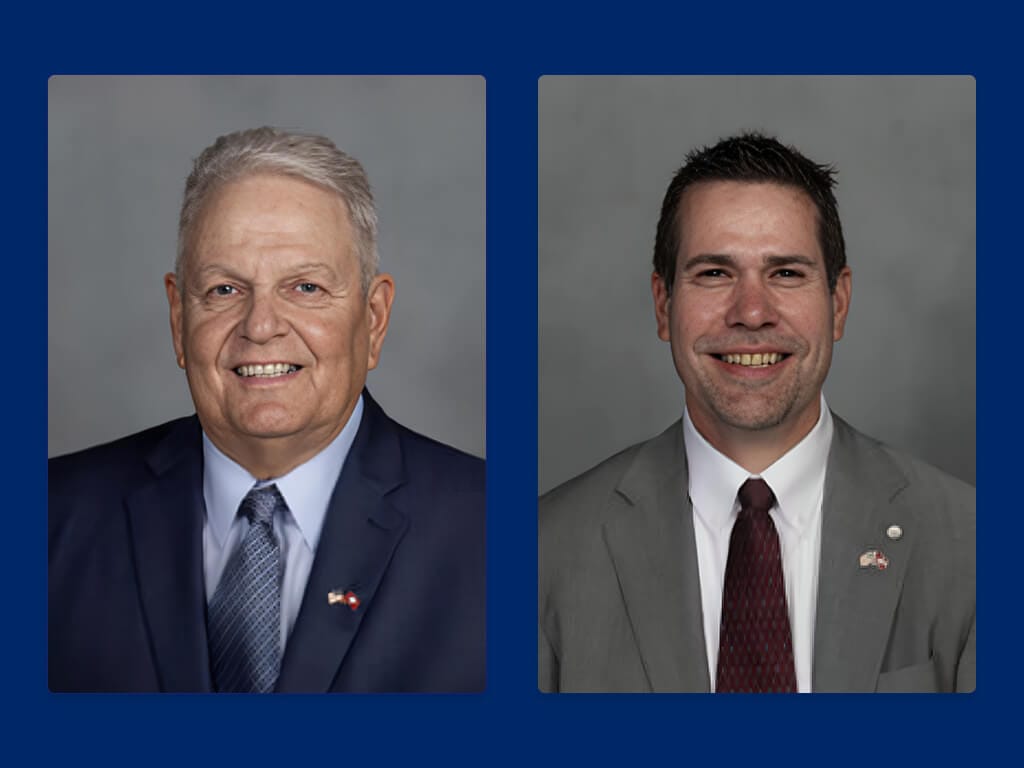
Senate District 26 is poised for new leadership after a crowded special election Tuesday night ended without a clear winner. Five Republicans sought to fill the seat left vacant by the death of Senator Gary Stubblefield, but none captured a majority of the vote. Wade Dunn and Brad Simon finished with the most support and will advance to a February 3 runoff. No Democrats entered the race, though an independent candidate is running, and the runoff winner will face independent Adam Watson in the March 3 special election.
The district is considered a reliably Republican stronghold, leaving little expectation that an independent candidacy could upend the outcome absent an extraordinary political upset. Still, the contest has drawn uncommon attention for a legislative race, fueled by a single, polarizing issue that has reshaped the campaign and energized voters.
With just four weeks remaining before the runoff, the two Republican contenders are racing to distinguish themselves, largely by staking out opposition to a proposed Franklin County prison project or by elevating another issue that resonates with voters. Dunn, a retired businessman backed by the family of the late Senator Stubblefield, and Simon, a small business owner who far outspent his Republican rivals, now face a condensed and closely watched sprint to the nomination.
Prison Project Dominates the Campaign
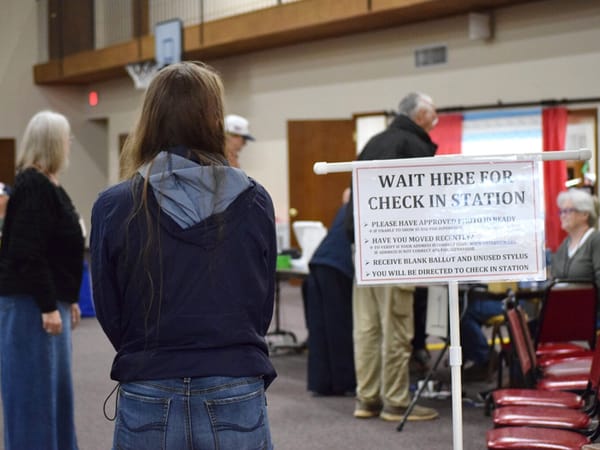
Tuesday’s special primary for Senate District 26, which includes parts of Franklin, Logan, Sebastian, and Johnson counties, drew turnout far higher than is typical for a special election. The heightened interest reflected a convergence of unusual factors: fierce local opposition to a proposed prison project that the late Senator Gary Stubblefield had strongly resisted, the determination of the governor and her allies to advance the plan, efforts to delay the election, and court intervention. Together, those elements turned a normally low-profile legislative contest into a closely watched race.
The compressed campaign leading into Tuesday’s vote was dominated by debate over the proposed 3,000-bed Franklin County prison championed by Gov. Sarah Huckabee Sanders and her allies. The project has drawn sharp criticism from local officials and residents, while supporters argue it is a necessary response to longstanding shortages in state prison capacity. Opponents counter that residents were not given a meaningful voice in the decision and say the proposed 815-acre site is ill-suited for such a facility.
Turnout patterns reflected how intensely the issue resonated closest to the proposed site. In Franklin and Logan counties, “the proximity to the prison issue drove turnout to be probably, what I would say, twice as high what you would see in an average special election primary,” said Robert Coon, a Republican strategist and lobbyist. By contrast, turnout was significantly lower in Sebastian and Johnson counties.
In Franklin County, 16.7 percent of registered voters cast ballots, while Logan County recorded a turnout of 19.1 percent. Sebastian and Johnson counties saw turnout of 9.6 percent and 7.5 percent, respectively. Even those lower figures exceeded participation in the other special election held the same day, for House District 70, where just 3.8 percent of registered voters went to the polls. Altogether, more than 6,000 votes were cast across the four counties.
Unofficial Results and Runoff Stakes
Unofficial results showed Wade Dunn leading the field with 37.38 percent of the vote, or 2,291 ballots cast. Brad Simon followed with 30.93 percent, totaling 1,896 votes. Former state Rep. Mark H. Berry finished third with 13.61 percent, or 834 votes, while Stacie R. Smith received 9.32 percent, or 571 votes. Ted Tritt trailed with 8.76 percent, or 537 votes. Because no candidate surpassed the 50 percent threshold required to win outright, the race advanced to a runoff.
Keeping voters engaged will be one of the biggest challenges for the candidates heading into the runoff. According to special election trends, turnout is likely to decline. With the two remaining Republicans offering largely similar platforms, he said, both campaigns will need to identify issues that clearly distinguish them over the next four weeks.
Looking beyond the immediate race, affordability is emerging as a key theme in the 2026 midterm elections nationwide, and Arkansas is no exception.
Candidates Draw Sharp Contrasts
In an interview, Watson said that “nine times out of ten,” the first question he hears while knocking on doors and speaking with voters centers on his position on the prison.
Dunn said he was encouraged by the level of support he received in the primary and has made his opposition to the project a central part of his campaign.
“She did not want a representative in this seat because that would be just one more vote for the prison,” Dunn said.
Dunn said he is firmly opposed to the prison, calling it the wrong location and criticizing how the process has been handled. He also pointed Wednesday to other policy priorities, including eliminating property taxes for people over the age of 65 and for veterans, and creating an Arkansas version of Elon Musk’s short lived Department of Government Efficiency, known as DOGE, at the federal level.
“This thing comes down to trust,” Dunn said. Voters, he added, face a basic choice between the two candidates: “Are these men going to represent the people, or are they going to represent the government?”
Simon, by contrast, has framed his candidacy around effectiveness and experience.
“We need an effective voice for our district, not just the loudest voice in the room,” Simon said. “Someone that has proven they can get things done against all odds. I’ve built a successful business from scratch, and I can take that mentality down to Little Rock, where I can help stop the prison in Franklin County, cut taxes, and relieve the inflation pressure on families.”
Simon has said he wants to continue lowering income taxes and reduce state regulation. On Wednesday, he again cited cutting taxes and easing inflation pressure as top priorities.
“We need an effective voice for our district, not just the loudest voice in the room,” he said in a text message. “Someone that has proven they can get things done against all odds.”
Endorsements and What Comes Next
Former state Rep. Mark Berry, who finished third in the unofficial results, said he would endorse Simon in the runoff. Berry described Simon as a “man of principle” while criticizing Dunn as someone who would “do and say anything to get elected.”
Stacie Smith and Ted Tritt, the other two Republican candidates who conceded, had not announced endorsements of either remaining contender as of Wednesday afternoon. With Berry’s roughly 14 percent share of the vote potentially in play, some observers have suggested that his support, combined with Simon’s existing base, could be enough to narrow or overcome Dunn’s current lead.
Voters will return to the polls on February 3 to select the Republican nominee. The winner of the special primary will then face an independent opponent, who can garner support from various political groups, in the special general election on March 3, 2026.