With Vouchers Now Universal, Arkansas Public Schools Confront a Historic Enrollment Drop
The expansion of school choice vouchers in Arkansas coincides with a historic decline in public school enrollment, the largest in two decades.

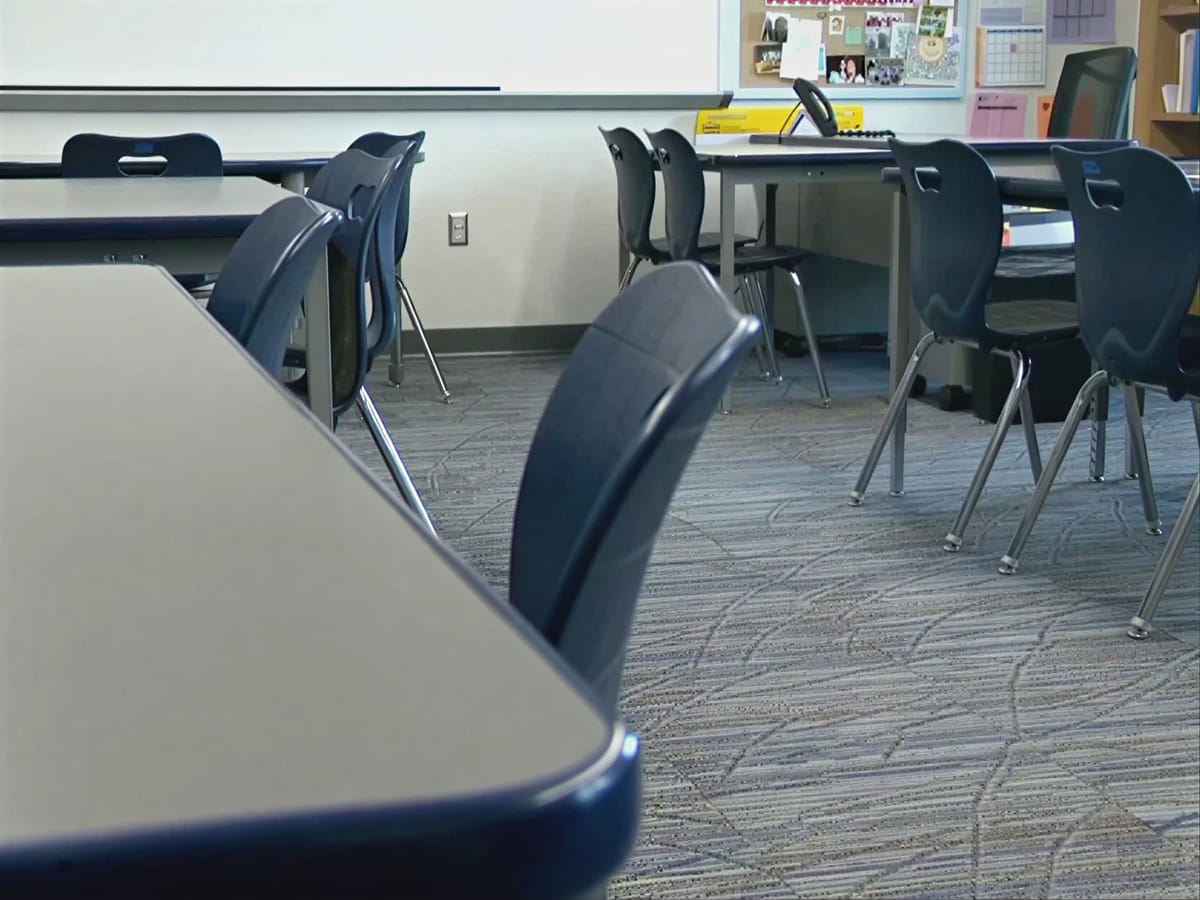
Public school enrollment in Arkansas has fallen sharply this school year, marking the steepest single year decline in at least two decades. While similar trends are playing out across much of the developed world, driven by smaller family sizes and shifting educational preferences, the timing in Arkansas has intensified political debate. The drop coincides with the first year that school choice vouchers created under the Arkansas LEARNS Act were made universally available statewide, drawing renewed attention to education policy and the rapid expansion of the state’s voucher program.
Enrollment Falls Across the State
In the 2025-26 school year, Arkansas public schools enrolled a total of 465,421 students across traditional and charter campuses. That figure is nearly 9,000 lower than the 474,337 students enrolled in the 2024-25 school year. The nearly 2 percent decline in a single year surpasses any annual enrollment drop seen during the COVID-19 pandemic and may represent the sharpest decrease in public school enrollment in the state in roughly two decades.
The decline has been felt across much of the state. Among Arkansas’ 12 largest school districts, all but two reported fewer students than the previous year. Fayetteville held relatively steady, while Bentonville was the only district to post significant growth. Driven by rapid population increases in Benton County, the Bentonville School District added nearly 400 students.
Most other large districts saw notable losses. Rogers, Fort Smith, Cabot, Bryant, North Little Rock, Jonesboro, and the Pulaski County Special School District each experienced enrollment declines of at least 2 percent. Springdale, the state’s largest district, lost 559 students, a 2.6 percent drop. The Little Rock School District, now the third largest, saw enrollment fall by 600 students, or 3 percent. Conway, the ninth largest district, recorded a 3.7 percent decline.
The Role of Education Freedom Accounts
The most immediate explanation for the enrollment decline is the expansion of Arkansas’ Education Freedom Accounts, a school voucher program that provides participating families with about $7,000 per student to use toward private school tuition or homeschooling expenses.
The program was launched in 2023 after passage of the Arkansas LEARNS Act, Gov. Sarah Huckabee Sanders’ sweeping education overhaul. During its first two years, participation was capped at relatively modest levels. In the 2024–25 school year, the program’s second year, 14,256 students received vouchers.
That changed this year, when eligibility was expanded to include every kindergarten through 12th grade student in the state. As a result, the number of voucher recipients surged to nearly 47,000. In the program’s first two years, most recipients were already enrolled in private schools, were being homeschooled, or were entering kindergarten. The state has not yet released a comparable breakdown for the third year of the program, which is the current school year.
State data, however, offers some insight. Of the students approved for vouchers this year, about 28,000 were already attending private schools and roughly 16,000 were already homeschooled. If those figures are accurate, only about 2,000 of the roughly 46,000 voucher recipients used the program to move from public schools.
Even if the entire 9,000 student drop in public school enrollment this year were attributed to vouchers, it would still suggest that fewer than 20 percent of the approximately 47,000 participants in the 2025–26 school year transferred from public schools. Under that assumption, the vast majority of voucher recipients were already in private schools, homeschooled, or entering kindergarten.
Financial Impact on Public Schools
Critics of the LEARNS Act have long argued that the voucher program has primarily benefited families who were already able to afford private education. Rather than providing meaningful relief to low income families in struggling school districts, they say Education Freedom Accounts have directed hundreds of millions of taxpayer dollars to families who were already outside the public school system.
At the same time, the program has created growing challenges for public schools. As students leave, districts lose enrollment based funding along with the broader community investment that supports school operations.
The expansion of vouchers has also coincided with rising tuition costs at private schools across Arkansas. Since vouchers became available, some private schools have raised tuition by thousands of dollars. Critics argue this has strengthened private schools financially while widening gaps in resources and quality between private and public schools, further accelerating enrollment declines in the public system.
National Trends and Pandemic Effects
Vouchers are not the only factor contributing to declining public school enrollment. Nationwide, enrollment has been falling for years due to declining birth rates and the expansion of school choice programs in several states. Smaller families naturally result in fewer children entering the education system.
The COVID-19 pandemic further accelerated the trend. Many families who withdrew their children from public schools during extended closures in 2020 and 2021 never returned.
According to The Hill, public school enrollment nationwide declined by 2.5 percent between fall 2019 and fall 2023. In Arkansas, the decline over that same period was more modest at about 0.9 percent. That difference may reflect former Gov. Asa Hutchinson’s push to keep schools open as much as possible during the pandemic.
What Comes Next
Some education leaders remain cautiously optimistic that the trend may be temporary. “I think that these numbers are going to level off in the next couple of years, but I hope they do, quite frankly,” said April Reisma, president of the Arkansas Education Association. Others, however, believe the current decline may mark the beginning of a more lasting shift. Time will tell whether the sharp drop in the 2025-26 school year proves to be an anomaly or the start of a longer term change.