As Votes Are Counted, Arkansas Primaries Show Some Interesting Developments
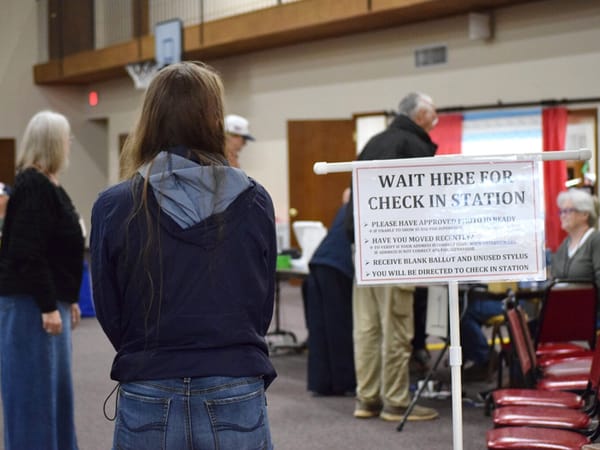
Early results from Arkansas’ primary and special elections are beginning to show surprising developments in races that many had expected to be uneventful.

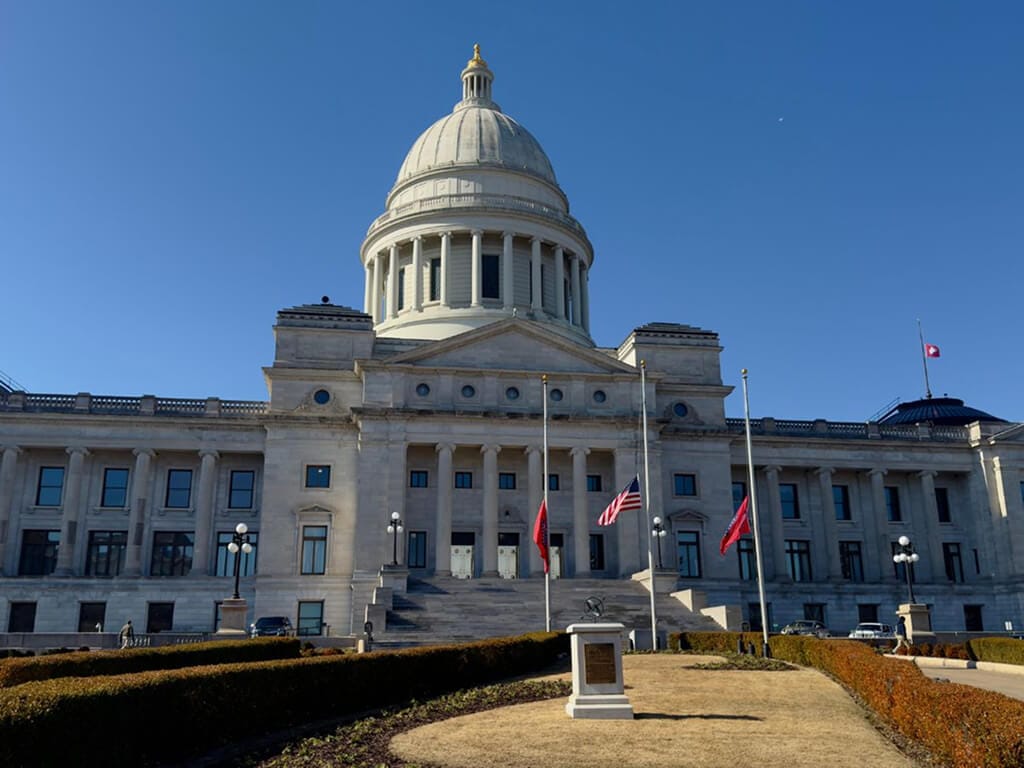
Early returns from Arkansas’ primary elections are beginning to bring the state’s political landscape into clearer focus ahead of November’s general election. While several races were called quickly, other outcomes remained unsettled as officials continued counting ballots across the state.
The night produced several notable developments. Two incumbents endorsed by Gov. Sarah Huckabee Sanders were defeated in their races, suggesting limits to the governor’s influence within Republican primaries. At the same time, a closely watched special election in central Arkansas resulted in a party flip in the state legislature.
Even in a deeply Republican state, where many predicted few surprises, results across congressional, legislative, and local contests produced unexpected outcomes and raised the possibility of a few historic firsts.
Sanders Endorsements Tested in Key Republican Primaries
Sens. Bryan King and Ron Caldwell secured decisive victories over their primary challengers, even though those challengers had been endorsed by Sarah Huckabee Sanders and Kid Rock. In another key race, Senate Majority Leader Blake Johnson, who also had the governor’s backing, lost his seat to two term Rep. Jeremy Wooldridge. Johnson’s defeat raises new uncertainty about who will lead the state Senate in 2027.
The contests involving King and Caldwell attracted particular attention because both lawmakers had voted against a $750 million appropriation to build a controversial prison in Franklin County. Some observers saw the primaries as a test of Sanders’ influence within the Republican Party. Her support for challengers to the incumbents echoed a tactic frequently used by her political ally, Donald Trump, who has often endorsed primary opponents to Republicans who diverge from his political agenda.
Despite Sanders campaigning for the challengers and significant spending from outside political groups, the incumbents prevailed. King defeated his opponent with about 60 percent of the vote, while Caldwell won with roughly 70 percent in his district. Wooldridge, the son of a prominent former legislator, defeated Johnson with 62 percent of the vote in Senate District 21.
Two attorneys backed by Sanders were also defeated in their races.
Still, several Republicans supported by the governor were successful Tuesday night, including U.S. Sen. Tom Cotton and Nicholas Bronni, who won a full term on the court
Fred Love Wins Democratic Primary
State Sen. Fred Love will face Sarah Huckabee Sanders in November after defeating Bentonville businesswoman Supha Xayprasith-Mays in the Democratic primary.
Love, a term-limited lawmaker from Mabelvale, built a strong lead shortly after polls closed Tuesday evening. AP called the race around 8:30 p.m.
Love and Libertarian candidate Colt Shelby will challenge Sanders, who is seeking a second term as governor.
Love has served in the state legislature since 2011 and has sponsored roughly two dozen laws. Those measures include requiring training for election officials, prohibiting the sale of a dead human body, and mandating warning labels on hair relaxers that contain cancer causing chemicals.
In 2015, Love also sponsored legislation that sought to remove Robert E. Lee from the state holiday honoring Martin Luther King Jr.. Arkansas enacted that change in 2017.
Sanders ran unopposed in the Republican primary.
U.S. Senate Race: Cotton and Shoffner Advance
Arkansas voters will also decide a U.S. Senate race this fall between two term Republican Sen. Tom Cotton and Democratic Hallie Shoffner.
Cotton won the Republican primary with 82.1 percent of the vote, defeating Micah Ashby and Jeb Little. The race was called by the Associated Press with about 20 percent of ballots counted. Shoffner, a sixth generation farmer from Jackson County, Arkansas, defeated Ethan Dunbar with 81.2 percent of the vote in the Democratic primary.
Voters in central Arkansas will also decide the race for the state’s 2nd Congressional District, where Democrat Chris Jones will face Republican Rep. French Hill in the general election. Hill secured the Republican nomination by defeating challenger Chase McDowell with 76 percent of the vote.
Jones, a pastor and physicist from Pine Bluff, Arkansas, won the Democratic primary with 93 percent of the vote over Zack Huffman. Jones previously ran for governor in 2022.
During a Democratic watch party, Jones criticized Hill for aligning closely with Donald Trump while many Arkansans face rising living costs.
In Arkansas’ 4th Congressional District, James Russell III defeated Steve O’Donnell in the Democratic primary with 53 percent of the vote. Russell will face Republican Bruce Westerman.
Special Elections and Legislative Shifts
Republican Brad Simon won a special election for Arkansas Senate District 26, defeating independent candidate Adam Watson with 69 percent of the vote.
Simon will replace the late Sen. Gary Stubblefield, whose death left the seat vacant.
The race drew statewide attention because the district includes the site of a proposed 3,000 bed prison in Franklin County. The election was delayed by legal challenges after critics argued the district should not remain unrepresented during key legislative discussions about the prison project.
Meanwhile, Democrats drew national attention after flipping a Republican held legislative seat.
Democrat Alex Holladay defeated Republican businessman Bo Renshaw in a special election for Arkansas House District 70. The seat had previously been held by Republican Rep. Carlton Wing.
Holladay said his defeat in 2024 helped shape the message and direction of his latest campaign.
He said that North Little Rock and Sherwood appear ready for change, and that many residents told his campaign they were tired of one party rule in Arkansas.
Lonoke County Sheriff’s Race Becomes More Interesting
One of the most closely watched races in the state took place at the local level.
Aaron Spencer won the Republican primary for Lonoke County sheriff with more than 53 percent of the vote. He faces Democrat Brian Mitchell Sr. in the general election.
Spencer is awaiting trial on a second degree murder charge connected to the 2024 death of Michael Fosler, who had been accused of sexually abusing Spencer’s teenage daughter.
According to court records, Spencer shot Fosler after finding his daughter with him in Fosler’s truck. If Spencer is convicted of the felony charge, he would be unable to serve as sheriff.
“Tonight the people of Lonoke County stood up and chose transparency and accountability,” Spencer said after the primary.
The case has drawn repeated intervention from the Arkansas Supreme Court, which removed the judge overseeing the case and overturned earlier restrictions on public access to the trial.
Spencer has campaigned on promises to strengthen protections against child sexual abuse, including creating a specialized investigative unit.
The race attracted unusual attention for a local contest and drew more interest from voters in the community than several statewide races.
A Sign of Increasingly Nationalized Local Politics
The results suggest that Arkansas voters are increasingly influenced by national political issues as much as by traditional local concerns, pointing to a broader nationalization of local politics.
Prosecutor races, county offices, and legislative contests have attracted significant spending and attention from outside political groups. Analysts say this trend reflects wider national debates over issues such as criminal justice, education policy, and immigration.
So far, the outcomes do not signal any immediate threat to Republican dominance in the state. Still, the results offer a few developments that may be worth noting for Sarah Huckabee Sanders.