A New Name, a New Chapter for Public Television in Arkansas
Facing mounting financial pressure, Arkansas PBS votes to leave PBS and establish an independent identity under a new name, Arkansas TV.


For many Arkansans, the change is deeply emotional. Arkansas PBS has been a familiar presence for decades, sustained by loyal viewers who donated, advocated, and stayed with the network even as it faced mounting financial strain. State leaders, however, say the moment has arrived for a necessary shift.
Public broadcasting in Arkansas is now entering a new chapter. The state network is ending its long standing relationship with PBS and adopting a new name, identity, and programming slate as Arkansas TV. Officials say the move is driven by financial realities and the need to secure long term sustainability.
A Historic Decision
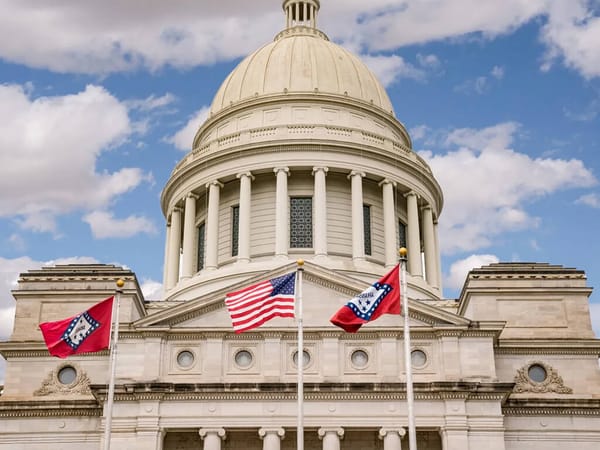
In a landmark decision on Thursday, the commission overseeing public television in Arkansas voted to sever ties with PBS, making the state the first to formally end its contract with the national broadcaster, though Alabama had considered a similar move before reversing course. The eight-member Arkansas Educational Television Commission, composed entirely of gubernatorial appointees, announced in a news release that the disaffiliation will take effect on July 1, marking the end of Arkansas PBS as it has been known for decades.
The commission cited annual PBS membership dues of roughly $2.5 million, describing the cost as unsustainable amid tight financial constraints. The announcement also noted the unexpected loss of a comparable amount in federal funding from the Corporation for Public Broadcasting, which had been targeted for closure earlier this year and subsequently defunded by Congress.
After 59 years on the air, Arkansas PBS is now entering its most significant transformation, a shift designed to preserve public television in the state while moving away from the national PBS framework.
Rebranding and a Local Focus
Arkansas PBS will officially rebrand as Arkansas TV, placing a greater emphasis on locally produced programming, Executive Director and Chief Executive Officer Carlton Wing said. Wing, a former Republican state representative, assumed leadership of the agency in September.
“Public television in Arkansas is not going away,” Wing said. “We invite viewers to join our vision for an expanded focus on local programming, continuing to safeguard Arkansans in times of emergency and supporting our K-12 educators and students.”
PBS programming will remain available to viewers through June 30, 2026. Beginning July 1, the network will fully transition to Arkansas TV.
Following the rebrand, the network plans to introduce locally produced shows, including children’s content, food programs, and history series currently in development, alongside beloved programs from the last 60 years. Much of PBS’s programming will still be accessible online through the PBS app.
“We will be getting programming from other national providers, and viewers will see familiar names like Bob Ross,” Wing said. “But what they will also see is a schedule that is far more focused on Arkansas. Viewers will get to know their state.”
Currently, Arkansas PBS produces about 5.5 percent of its own content. Wing said that number is expected to grow significantly by this time next year.
The Challenge Ahead for Arkansas TV
Despite assurances from state leaders, the decision to disaffiliate from PBS has sparked a strong public reaction. For many viewers, the change is deeply personal. “The commission’s decision to drop PBS membership is a blow to Arkansans who will lose free, over-the-air access to quality PBS programming they know and love,” a PBS spokesperson wrote in an email to The Associated Press.
The spokesperson highlighted a June 2025 YouGov survey showing widespread support for PBS in Arkansas. According to the survey, 80 percent of Arkansans said PBS funding is either too little or about right, while 62 percent opposed eliminating federal funding for the network.
The survey also emphasized the network’s educational impact. Eighty percent of respondents agreed that PBS helps prepare children for success in school, and 77 percent said it is a trusted and safe source for children’s media. Seventy-two percent said their local PBS station provides excellent value to the community, and 70 percent underscored the importance of access to educational media free from commercial influence.
Viewers reported strong attachment to a wide range of programming. Children’s educational content was valued by 86 percent, national news and public affairs by 85 percent, science, history, and nature programs by 88 percent, local and regional content by 84 percent, and weather and emergency alerts by 89 percent.
With the launch of Arkansas TV, the network faces a significant challenge in meeting these expectations and maintaining the trust of its audience without the familiar slate of PBS programs.
Political and Public Response
Arkansas House Democratic Leader Representative Andrew Collins described the decision as a sad development. “It is certainly a loss for Arkansas families who value the programming of PBS,” Collins said.
Many viewers expressed concern about losing access to iconic programs such as Sesame Street, Nova, Antiques Roadshow, Masterpiece Theatre, British mystery series, documentaries, and annual events like the Fourth of July concert.
Social media reactions ranged from frustration to outright anger. One commenter wrote, “Classic hook up of authoritarian impulses with the MAGA mentality. Changing channels was not enough. Now no one can watch it.” Another shared, “I am an Arkansas PBS donor. All my shows will be gone. I will no longer financially support the local TV station. This decision changes my life in a very negative way.”
Viewers also questioned whether Arkansas TV could maintain the quality and variety of programming that PBS provided. Concerns were raised about rural areas, where PBS often serves as the only educational broadcast option. PBS Kids content will remain available through the PBS app, while PBS Passport content will cost $60 per year.
Some criticism was directed personally at Carlton Wing, with commenters accusing him of betraying longtime supporters and weakening Arkansas public media.
Arkansas Senator Dan Sullivan defended the decision, framing it as aligned with public sentiment. “The voters in Arkansas want public television to be self-supporting and self-sustaining,” he said. “Arkansas PBS was about Arkansans, yet it purchased a lot of programming from national sources that was not focused on our state.”
Financial Considerations Behind the Transition
Supporters of the decision argue that financial sustainability left few options. The annual PBS membership fee was seen as the clearest way to reduce costs, though cutting the affiliation also removed access to certain programming. Marge Betley, CEO of the Arkansas PBS Foundation, told Little Rock Public Radio that donations are expected to drop initially. “We are always temporary stewards of the organizations and missions we serve,” Betley said. “To serve future generations, we must consider both mission and long-term sustainability.”
At Thursday’s commission meeting, Chief Financial Officer James Downs explained that continuing to pay PBS dues would have resulted in a negative cash balance by the end of the next fiscal year. “We are projecting deficit spending reaching $6 million by fiscal year 2030,” Downs said. “By not paying PBS dues, we reduce that gap and gain time to find new funding sources and operate more efficiently.”
Downs emphasized that maintaining the previous model was not sustainable. “We do not see a way to continue incurring more than $2 million annually in PBS membership dues while remaining operational,” he said.
Some observers expressed concern about the cost of producing new shows to fill the programming schedule. Officials associated with Arkansas PBS noted that local production could be completed at a lower cost than what the state was paying PBS. Producing local programs is expected to cost about $500,000 annually, while content purchased from American Public Television and the National Educational Television Association will cost roughly $469,000 per year. Combined, this amounts to about $1 million less than the annual PBS contract.
An Uncertain Future
Public television faces mounting challenges around the world, and even private media outlets wrestle with the pressures of the social media era. Success increasingly depends on forging meaningful connections with the community, a task that will be essential for Arkansas TV. Supporters argue that the transition will save money and create a network more attuned to local interests, yet retaining the loyalty of the PBS audience will be a significant challenge requiring careful effort.
The responsibility now rests with Carlton Wing and his team to show that Arkansas TV can sustain itself, engage viewers, and preserve public trust. Whether this transformation will be remembered as a bold reinvention or a lasting setback for public media in Arkansas remains uncertain.