
Arkansas’s Mineral Moment Widens With Magnesium in View
As lithium reshapes Arkansas’s economic outlook, magnesium is emerging as another mineral drawing interest from state leaders and investors.

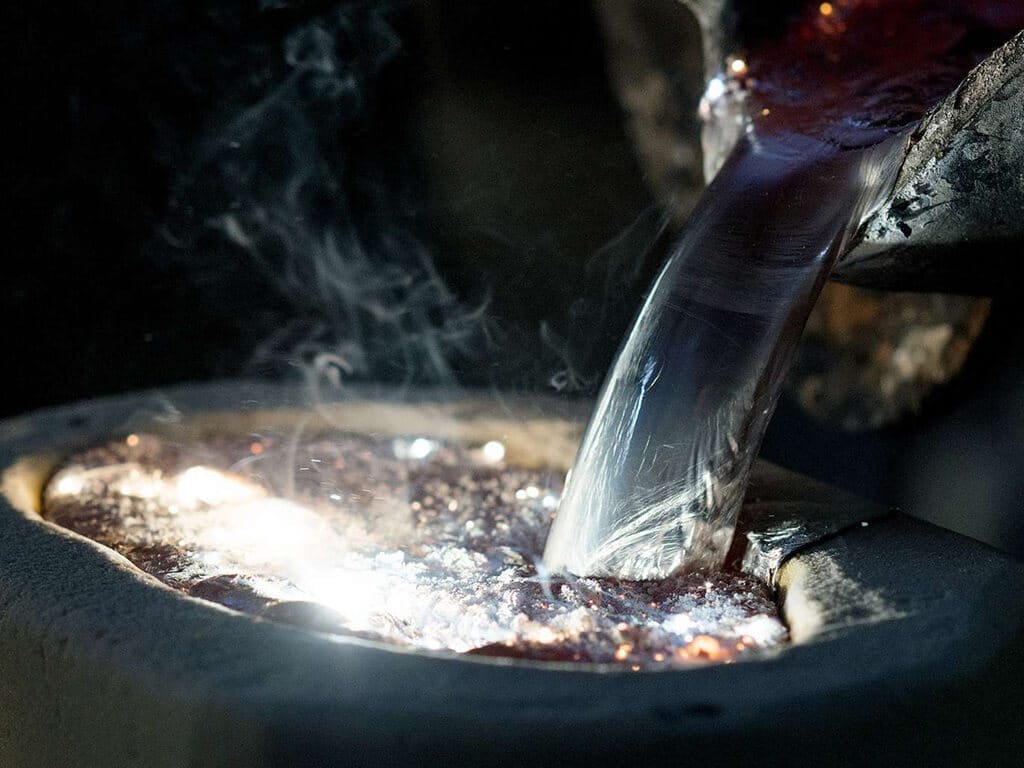
As Arkansas draws national attention for its lithium-related investments, another critical mineral, magnesium, is beginning to share the spotlight. Long overlooked despite its essential role in modern industry and national security, magnesium is now attracting investment and projects as part of a broader effort to strengthen domestic mineral supply chains.
For decades, global magnesium production has been dominated by China. Concerns grew when China showed a willingness to use its control over key materials as leverage. By that time, much of the United States’ magnesium production had already declined. Today, the world’s major producers are located outside the U.S., including China, Russia, and Iran, nations with tense relations with Washington. This situation has made the search for reliable domestic sources increasingly urgent.
Southwest Arkansas is emerging as a key center in this effort. Magrathea, a leading U.S. magnesium company, is positioning the region to play a central role in a national push to rebuild America’s magnesium supply chain.
A Joint Venture Anchored in Southwest Arkansas
A major magnesium project is taking shape in southwest Arkansas, where TETRA Technologies, based in The Woodlands, Texas, and Magrathea Metal, a California-based technology company, are advancing a joint venture aimed at rebuilding America’s magnesium metal defense industrial base.
The venture is anchored at TETRA’s Evergreen Project, a bromine production facility near Stamps. With more than 40,000 acres of brine leases across Arkansas, TETRA has positioned itself as a major player in the state’s growing critical minerals economy.
The Evergreen plant is projected to produce 75 million pounds of bromine annually, with operations expected to begin by the end of 2027. In addition to bromine, TETRA plans to extract and commercialize other critical minerals from the brine, including lithium and magnesium. As part of this effort, TETRA and Magrathea are actively exploring how Magrathea’s electrolytic magnesium technology could be integrated into the existing brownfield site to produce the magnesium needed by Magrathea for defense industry applications.
“We are thrilled to be working with a well-established global specialty chemicals and industrial minerals player like TETRA,” said Alex Grant, chief executive officer of Magrathea. “This joint venture will unlock the value created by our team over the past three years. We are now taking meaningful steps to evolve from a technology research and development lab into an industrial project co-developer.”
Brady Murphy, president and chief executive officer of TETRA, said the partnership aligns with the company’s long-term strategy while supporting broader national objectives.
“Our intention to work with Magrathea for the clean, high-quality domestic manufacturing and production of magnesium is another key step toward achieving our ONE TETRA 2030 strategy while supporting the U.S. initiative to develop a secure domestic supply of critical minerals,” Murphy said. “Through our planned partnership, we would combine Magrathea’s advanced process technology with TETRA’s deep operational expertise and a world-class magnesium resource base from our southwest Arkansas brine acreage.”
Murphy also noted that Magrathea has already secured Defense Production Act Title III funding from the Department of War to support its Commercial Phase 1, which is planned at TETRA’s Evergreen Plant. He expressed optimism that additional government support could follow as the project advances toward full commercialization.
State Leaders Highlight Strategic Stakes
Arkansas officials who welcomed the initiative highlighted its broader significance for both the state and the nation.
“This proposed new venture proves what Arkansans have always known. Our people and communities can compete with anyone in the world,” said Gov. Sarah Huckabee Sanders. “Magrathea and TETRA’s investment builds on Arkansas’ defense industry and ensures our nation’s future is powered by American innovation.”
Today, magnesium is not produced anywhere in NATO, a shortage widely regarded as a national security emergency. The metal is classified as a critical mineral by the Department of Energy, the Department of War, and the Department of the Interior.
Testing New Technology for Magnesium Extraction
The partnership will integrate Magrathea’s magnesium production technology into TETRA’s existing bromine and lithium operations in the Smackover formation.
TETRA plans to extract bromine, lithium, and magnesium from the Smackover’s brines, then reinject the remaining saline liquid back into the ground. The company has reached an understanding with Magrathea on financial and legal terms and will spend the next six months testing the technology.
The process uses electricity to remove magnesium from saltwater and convert it into metal. TETRA said the method is expected to be cleaner than traditional magnesium refining techniques.
“This is new technology,” said Brady Murphy. “The scientists are very confident that it works, but we need to demonstrate that it scales at a commercial level”. If successful, it could become a major contributor to the United States’ strategic ambitions in magnesium production.
Arkansas’s Resource Advantage
Arkansas has already attracted significant lithium investment, helping establish it as a growing center for critical minerals. Public concern about pollution has been limited, and the regulatory environment has encouraged these development efforts.
In September, TETRA released a study showing that the Smackover formation contains roughly 2 million metric tons of magnesium, a resource capable of substantially supporting domestic production needs.
This resource also provides ample opportunity for additional investments and new projects, further strengthening the state’s role in the nation’s critical minerals landscape.