Lawmakers Thwarted, Ballots Secured, and the Courts Brace for More
Pulaski County Circuit Court Judge Shawn Johnson rules Act 236 unconstitutional, restoring the minimum number of counties for ballot petition signatures from 50 to 15.

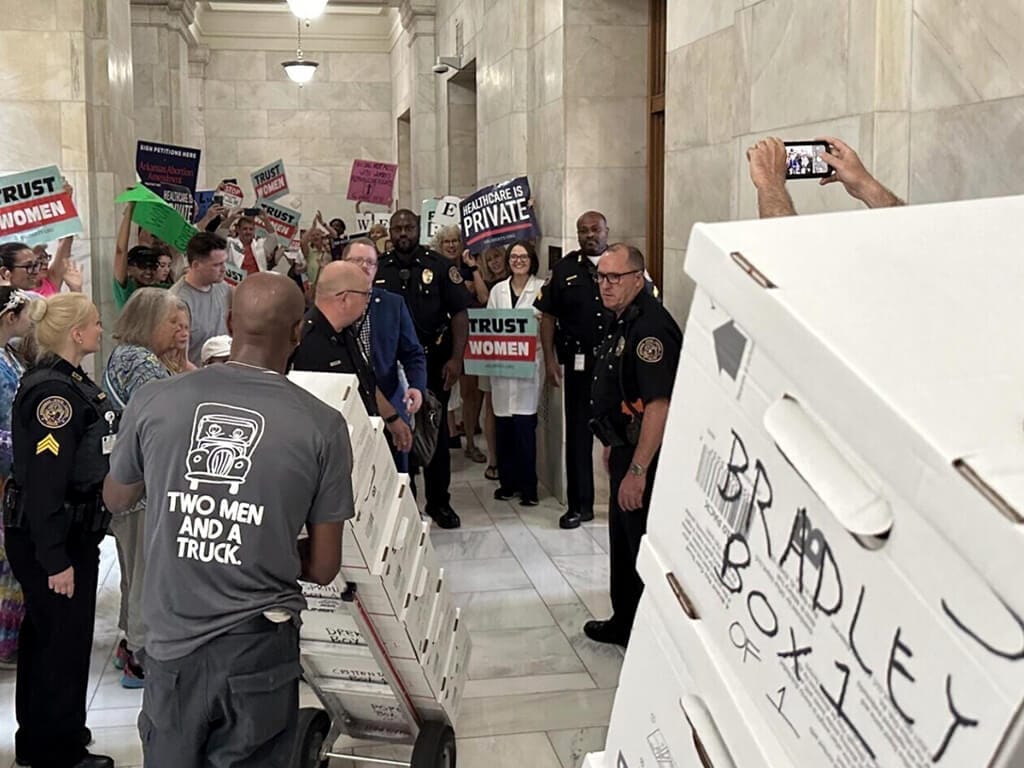
On February 13, a Pulaski County Circuit Court judge struck down a controversial Arkansas law that required citizen-led ballot initiatives to gather signatures from at least 50 counties.
Act 236, officially known as the Ensuring Access for All Arkansans and Voter Protection Act of 2023, had raised the minimum from 15 counties to 50, dealing a major blow to citizen-led initiatives. Critics argued the law created an unusually high barrier for anyone seeking to place a proposed constitutional amendment on the ballot. The legislation was challenged soon after it passed by the League of Women Voters of Arkansas and State Senator Bryan King, and the court’s ruling sided with the challengers.
This was not the first attempt to tighten signature requirements. In 2020, the legislature tried to raise the threshold to 45 counties, but the effort failed. Act 236 is the latest in a series of measures limiting ballot access, and it may not be the last.
What the Court Said
Pulaski County Circuit Court Judge Shawn Johnson blocked the state from enforcing Act 236.
“Act 236 of 2023 clearly and unmistakably conflicts with Article V, § 1 of the Arkansas Constitution and is thus unconstitutional on state law grounds,” the ruling stated.
Johnson highlighted that the law “impermissibly restricts the right of the people to petition for initiated acts, a reserved power expressly guaranteed by the Arkansas Constitution.”
State officials had argued that the 50-county requirement fell within the constitutional language, which references “at least” 15 counties. They also claimed the lawsuit should be barred under sovereign immunity, a doctrine that protects the state from being sued in its own courts. Johnson rejected both arguments, noting that sovereign immunity does not apply when the state acts unconstitutionally.
A Win for Direct Democracy
Judge Johnson’s ruling reinforces direct democracy in Arkansas, siding with critics who argued that Act 236 placed unnecessary hurdles on citizens trying to bring proposals to the ballot. Direct democracy lets residents propose new laws or constitutional amendments for a statewide vote, and Arkansas is one of 24 states that allow citizen-led initiatives.
The decision directly benefits advocates for citizen-driven lawmaking, including the League of Women Voters’ ballot question committee, Save AR Democracy, which is collecting signatures for a proposed amendment aimed at strengthening the state’s direct democracy process. Sponsors must gather 90,704 signatures for constitutional amendments, 72,563 for initiated acts, and 54,422 for referendums by July 3. With the court’s ruling, these signatures now only need to come from 15 of Arkansas’ 75 counties.
The 50-county requirement had proved a significant barrier during the 2024 election cycle. Initiatives on sales tax exemptions for feminine hygiene products and diapers, along with proposals promoting government transparency, struggled to meet the threshold. Other measures, including those related to education and abortion, either fell short of the signature requirement or were disqualified over paperwork errors.
Reactions From Advocates
Officials with the League of Women Voters of Arkansas hailed the ruling as a major win for voters. “For over a century, the League of Women Voters of Arkansas has been steadfast in defending our constitutional rights,” said Arkansas League President Bonnie Miller. “We filed this lawsuit three years ago immediately after the law passed, and today we celebrate the striking down of this thinly veiled attempt to silence the voters. This is a good day for the people.”
Friday’s decision clears the path for Save AR Democracy to collect signatures more efficiently for their proposed amendment, which aims to simplify the initiative and referendum process.
“They tried it, the voters said no, then they tried to do it themselves. The court said no. You cannot change the constitution with a statute or make it harder for people to exercise their constitutional rights,” said David Couch, the attorney representing the League, in an interview with KATV.
Couch added that the ruling makes the process more stable, limiting interference from the General Assembly. “Right now, anyone, conservative, independent, or liberal, could propose a ballot measure, and the Arkansas Supreme Court could strike it down at the end over a flawed ballot title. Our amendment simplifies this by handling the ballot title at the start. Once signatures are collected, they are valid.”
Even if appeals continue, Couch does not expect them to block signature gathering ahead of the July deadline. “If it follows the normal course, it will not be decided before July 3. They could request an expedited appeal, but it is uncertain whether the court would grant it,” he said.
State Senator Bryan King also praised the decision. “I found it troubling that Republicans, of all people, would try to diminish the power of the people to challenge their government. That does not align with the intentions of our founding fathers. Today’s victory is a victory for the citizens of Arkansas,” he told KATV.
State Response
A spokesperson for Arkansas Attorney General Tim Griffin confirmed that the state plans to appeal the ruling. Governor’s office spokesman Sam Dubke said, “Arkansas elections are ranked among the most secure in the country thanks to our state’s democratically enacted laws, and Governor Sanders is confident that, on appeal, the courts will uphold the laws that protect Arkansas ballots from bad actors and nefarious influences.”
Arkansas Secretary of State Cole Jester added, “While this law was passed prior to the current administration, we strongly believe it is valid and intend to appeal.”
The statements signal that the state is prepared to continue the legal battle.
Public Reaction
Public reaction on social media and forums has been overwhelmingly supportive of the ruling. Many commentators expressed frustration and even ridicule as Arkansas voters watched a series of legal setbacks for GOP-led efforts to restrict ballot access. Several laws or orders that appeared constitutionally not solid have been struck down in federal courts and faced challenges reaching the Supreme Court. Reddit communities in particular focused on criticizing the government’s attempts to limit citizen initiatives.
Reddit discussion link: https://www.reddit.com/r/Arkansas/s/wrtT1rBFsw
Some notable comments included, “GOP is terrified of letting people actually have a voice,” “This is excellent news for all Arkansans, regardless of political affiliation. It strengthens citizens’ chances of maintaining the ballot initiative process, especially by voting for John Adams in the March 3 nonpartisan Supreme Court election,” and “We need more judges like this.”
While the legal battle will continue, the ruling ensures that Arkansans have a clearer and more accessible path to influence state law through ballot initiatives. It reinforces the importance of citizen engagement in the democratic process and underscores the principle that the state constitution remains a guiding safeguard, even when lawmakers attempt to override it.