Arkansas Grapples with an Expanding Feral Hog Problem and Rising Demands for Action
Arkansas faces rising feral hog populations, prompting urgent calls for effective management and statewide action.
The feral hog problem in Arkansas is only growing more stubborn. Despite the rising number of hogs trapped or hunted each year, the Arkansas Game and Fish Commission says their population continues to expand. The animals now roam through nearly every county, creating mounting challenges for landowners, farmers, and wildlife managers across the state.
Despite numerous programs and roughly twenty million dollars in federal spending each year on feral pig management, many residents say the efforts have yet to make a meaningful impact. Critics argue that without stronger, more coordinated strategies, the hog population will continue to grow unchecked, posing a growing threat to the state.
The Costly Consequences of a Growing Menace
Feral hogs, an invasive and highly destructive species, are responsible for an estimated $30 to $40 million in damage each year to crops, infrastructure, and natural habitats in Arkansas. Descended from escaped or released domestic pigs, these animals have become wild and aggressive over time, developing thick hair and sharp tusks. With few natural predators in North America, they thrive largely unchecked, uprooting land and natural habitats and leaving behind costly and sometimes irreversible destruction.
Feral pigs can also pose a threat to humans, especially when moving in herds with their young. Across the United States, they have been known to attack without provocation, sometimes causing fatal injuries. Between 1825 and 2012, more than 100 attacks were documented, with five resulting in death. Both male and female feral pigs are capable of unprovoked attacks, and incidents have involved solitary males as well as groups, making them a dangerous species to encounter.
AGFC Leads the Fight Against Feral Hogs
The Arkansas Game and Fish Commission (AGFC) is at the forefront of efforts to manage the state’s growing feral hog problem. Ryan Farney, AGFC’s feral hog program coordinator, acknowledged the scope of the challenge. “Yeah, it’s fairly serious. We have hogs in just about every county of the state. They dig up large holes in fields or streams or whatever it may be. And they also compete for our natural resources, which drives off the native wildlife,” he said.
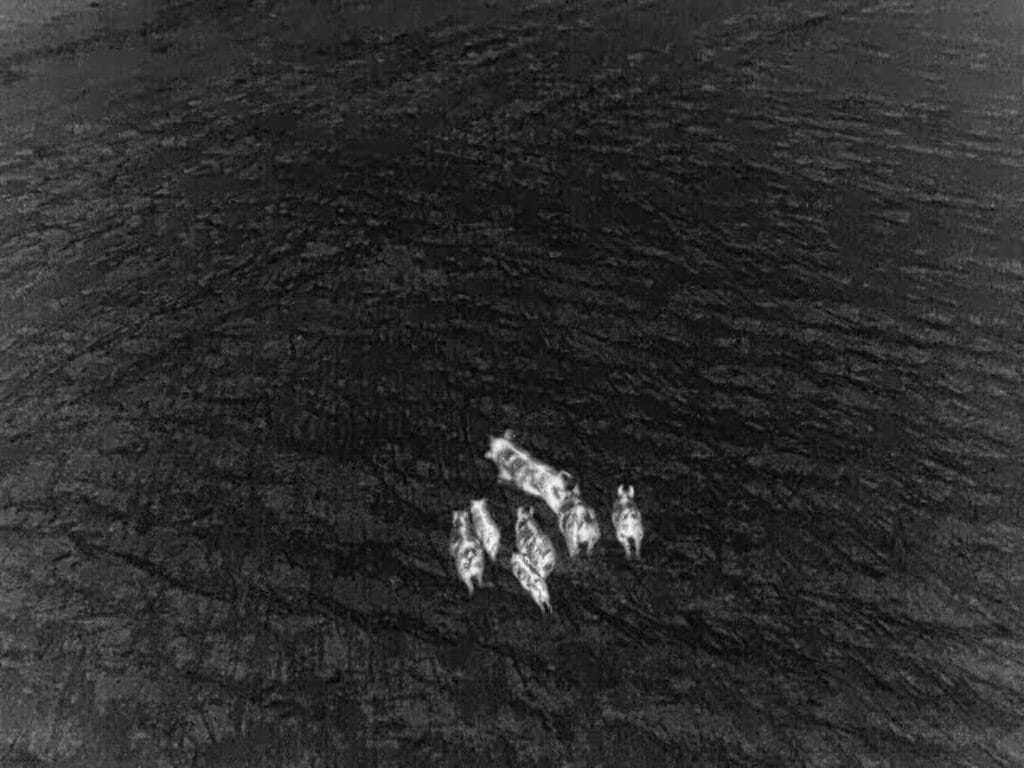
Farney emphasized the urgency of human intervention to prevent unchecked population growth. “If there’s not a human component there to limit their populations, then they will experience a population explosion. They reproduce extremely fast, not anything like a native animal would.” He highlighted the importance of aerial culling operations, which allow officials to access areas that traps cannot reach and remove large numbers of pigs quickly.
While some hunters have expressed interest in helping reduce feral hog numbers, Farney noted that recreational hunting has little impact on the overall population. “They essentially have no impact on a population as a whole. The way that we approach it is, it’s not an opportunity for recreation. It’s a mission to eradicate populations.”
The AGFC considers a combination of control methods, including trapping and helicopter operations, to mitigate the damage caused by these invasive animals.
Legal Hunting and Trapping: Tools Against the Hog Invasion
Arkansas law allows landowners, or anyone with the landowner’s permission, to shoot or trap feral hogs on private property at any time. Hunting and shooting feral pigs has been used for decades. While it can temporarily push hogs away from crops or food plots, the animals often return or move on to neighboring properties.
Studies show that at least 66 percent of a hog population must be removed each year just to keep it from growing. Hunting alone removes only 8 to 50 percent, which makes it ineffective as a single strategy. The Arkansas Game and Fish Commission identifies large scale trapping as the most effective and economical method now available. Recreational hunting has sometimes made matters worse. Illegal relocation of hogs for hunting spreads the problem into new areas, and shooting individual hogs can disrupt coordinated trapping efforts, making it difficult to capture entire groups.
Year round trapping remains the primary tool for the Arkansas Game and Fish Commission, and aerial operations using helicopters are also vital for reaching places that are otherwise inaccessible.
In 2024, the Arkansas Feral Hog Eradication Task Force, created in 2017 and made up of 20 federal, state, and nonprofit agencies, removed more than 12,000 hogs across the state. Aerial operations and participation in the Arkansas Game and Fish Commission Conservation Incentive Program strengthened these efforts. Supported by funding from the Arkansas General Assembly, the program provided 1.2 million dollars for feral hog traps, which led to the removal of 6,693 hogs and helped protect more than 900,000 acres.
Calls for Stronger, Statewide Action
The rising number of roaming feral hogs has farmers and landowners calling for stronger and more decisive action. Many fear that without firm intervention, the population could soon grow beyond control. The AGFC notes that managing feral hogs is a long term effort, and more removal operations are planned in the coming months, but the increasing numbers show that additional work is urgently needed. Expanding the capacity of current efforts, including more personnel and greater funding, has now become a priority.
The task force has identified the need for more full time staff and has used funds from the USDA Feral Swine Control Project to hire dedicated trappers. It is also pursuing new strategies, including the possible use of toxic baits and ongoing research into a boar sterilant at the University of Arkansas Fayetteville. Additional funding will be necessary to advance these efforts.
Through coordinated action and improved tools, Arkansas can push back against this destructive invasive species and work to keep its population from climbing further.