After Years in Retreat, Arkansas Democrats See a Flicker of Momentum
After years of setbacks in Arkansas politics, Democrats see a glimmer of momentum following Alex Holladay’s special election victory, raising cautious hopes for future contests.

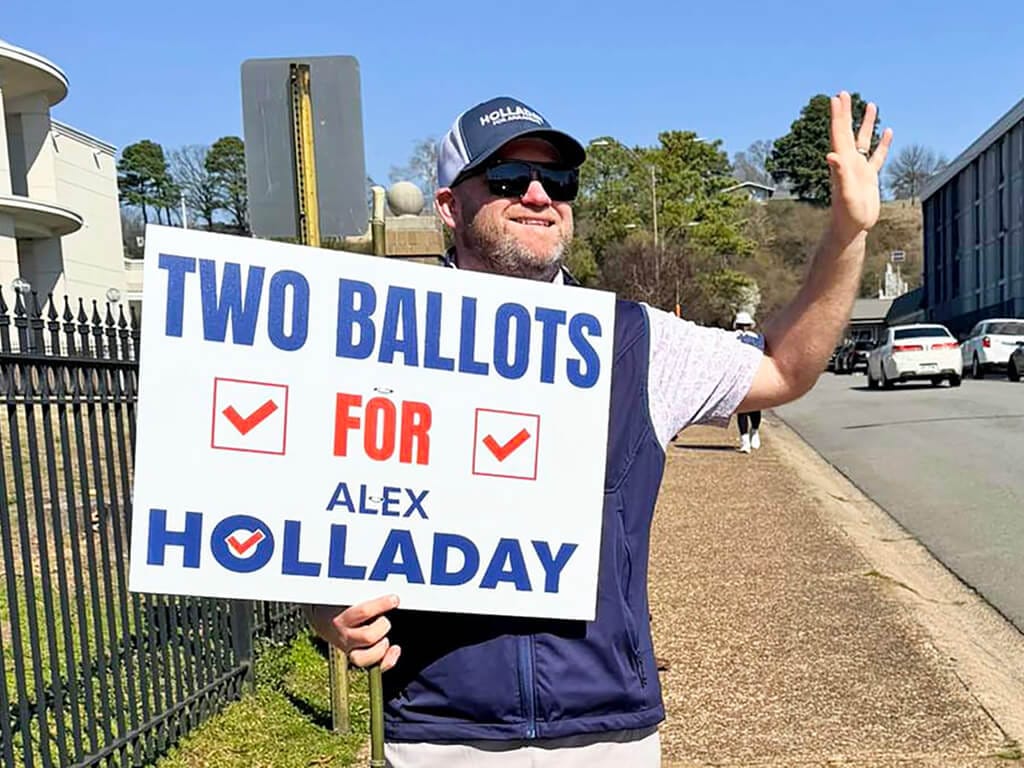
The victory of Alex Holladay in the special election for Arkansas House District 70 was, on the surface, just a single legislative race and one that did little to alter the Republican Party’s dominance in the state House. For Democrats in Arkansas, however, the outcome carried significance that went well beyond the seat itself.
After years marked by electoral defeats and a steady decline in political influence, the result offered the party something it has rarely experienced in recent cycles: a sense of renewed momentum. For party leaders and supporters, the special election also challenges the growing perception that Arkansas has become entirely out of reach for Democrats.
Instead, Holladay’s victory serves as a reminder that, with the right candidates and the right conditions, competitive races can still take shape even in a deeply Republican state.
Low Turnout and a Surprising Shift
According to the latest results, Alex Holladay won the special election with a comfortable margin. A total of 7,028 votes were cast in the race. Holladay secured 4,033 votes, or 57.4 percent, defeating Republican Brian Renshaw, who received 2,995 votes, or 42.6 percent.
The seat had previously been held by Carlton Wing, who represented the district for two terms and was part of the early wave of districts that shifted from Democratic to Republican control during the state’s broader political realignment. The special election was called after Wing resigned to accept a leadership role at Arkansas PBS. With Republicans having won the previous seven elections in the district, Holladay’s victory stands out as a notable result for Democrats.
Turnout was significantly lower than in the district’s previous election. In the last contest, 14,796 votes were cast, nearly double the number recorded in the special election. That earlier race was closely contested, with Wing receiving 7,541 votes, or 51 percent, while Holladay received 7,255 votes, or 49 percent.
Compared with the 2024 race, the district swung 17 points, a shift that has encouraged cautious optimism among Democrats hoping to rebuild their footing in future elections.
Several factors appear to have contributed to the outcome. Holladay’s familiarity with the district, along with his ability to remain competitive, likely helped him consolidate support. Some observers also point to lower Republican turnout as a significant factor.
Wing’s resignation and the timing of the special election created a political environment that differed from a typical general election cycle. Regardless of the factors behind it, the final result was a Democratic victory.
Democrats Celebrate the Result
Shortly after the results were announced, the victory quickly drew attention from national Democratic leaders. The size of the margin also challenged a common assumption in national political coverage that Democratic losses in Republican strongholds are inevitable.
Marcus Jones, chairman of the Democratic Party of Arkansas, said the result suggests that under the right circumstances Democrats can still compete in places widely viewed as out of reach.
Among state party leaders, the reaction carried a more personal tone as well as a political one. Jones said that shortly after Alex Holladay’s victory was confirmed, he sent Ken Martin a selfie with the newly elected representative, a small gesture meant to capture what many Democrats in Arkansas saw as a rare moment of celebration.
Other Races Democrats Pin Hopes On
Democrats are now looking ahead to several major contests that could test the party’s ability to compete statewide.
One of the most closely watched races is the campaign of Hallie Shoffner against Tom Cotton. Shoffner has drawn significant media attention during her campaign. She decided to challenge Cotton after tariffs forced her family out of the farming business following six generations of operation. Throughout the race, she has presented herself as a candidate focused on both the agriculture industry and the broader concerns of everyday Arkansans.
Shoffner faces a difficult path. Cotton is the incumbent and has received support from Donald Trump, and the political environment is more strongly Republican than the district where Alex Holladay recently won. Still, some Democrats believe that if Republican turnout drops, as it did in House District 70, the race could become more competitive.
Primary turnout patterns offer some clues about the political environment heading into November. According to data from the Arkansas Secretary of State, nearly 17,000 more Republican voters participated in the 2024 GOP presidential primary than in Cotton’s Senate primary.On the Democratic side, more than 49,000 additional voters participated in Shoffner’s primary compared with the 2024 Democratic presidential primary, when Joe Biden was on the ballot as the incumbent president.
If similar turnout patterns continue, lower Republican participation could become a factor in the general election.
The Congressional Battleground in Central Arkansas
Another race likely to draw attention is in central Arkansas’ Arkansas's 2nd congressional district, where Democrats believe they may have an opportunity to flip a seat in the United States House of Representatives.
The Democratic candidate is Chris Jones, the party’s nominee in the 2022 Arkansas gubernatorial election. In that race, Jones received roughly 35 percent of the vote against Republican Sarah Huckabee Sanders, who ultimately won the governorship.
Jones could present “a stiff challenge” to French Hill, the Republican congressman who has represented the district since his first election in 2014. The previous Democratic nominee in the district, Marcus Jones, received more than 40 percent of the vote in the race.
Even so, the district remains difficult terrain for Democrats. A 2021 redistricting plan moved thousands of predominantly Black voters into neighboring districts, reshaping the map in ways that strengthened Republican prospects in the 2nd District. Any Democratic victory would likely depend in part on whether Republican turnout declines or participation patterns shift.
Can Democrats Hope for More?
Despite the symbolic weight of the victory, Democrats still face formidable challenges in Arkansas. Republicans maintain a decisive advantage across the state’s political institutions. The Republican Party holds large majorities in the state legislature, controls every statewide partisan office, and occupies all of Arkansas’ seats in the United States Congress. Without a broader shift in the state’s political climate, changing that balance will be difficult.
The state’s voting patterns have also become sharply polarized. In many contests, Republican voters remain firmly aligned with their party even when dissatisfaction arises. Political frustration tends to manifest less through party switching and more through lower turnout.
Even so, party leaders and political observers say the victory of Alex Holladay offers a reminder as Arkansas approaches the next midterm cycle. With the right candidates and circumstances, they argue, competitive races can still emerge in districts long considered safely Republican.